
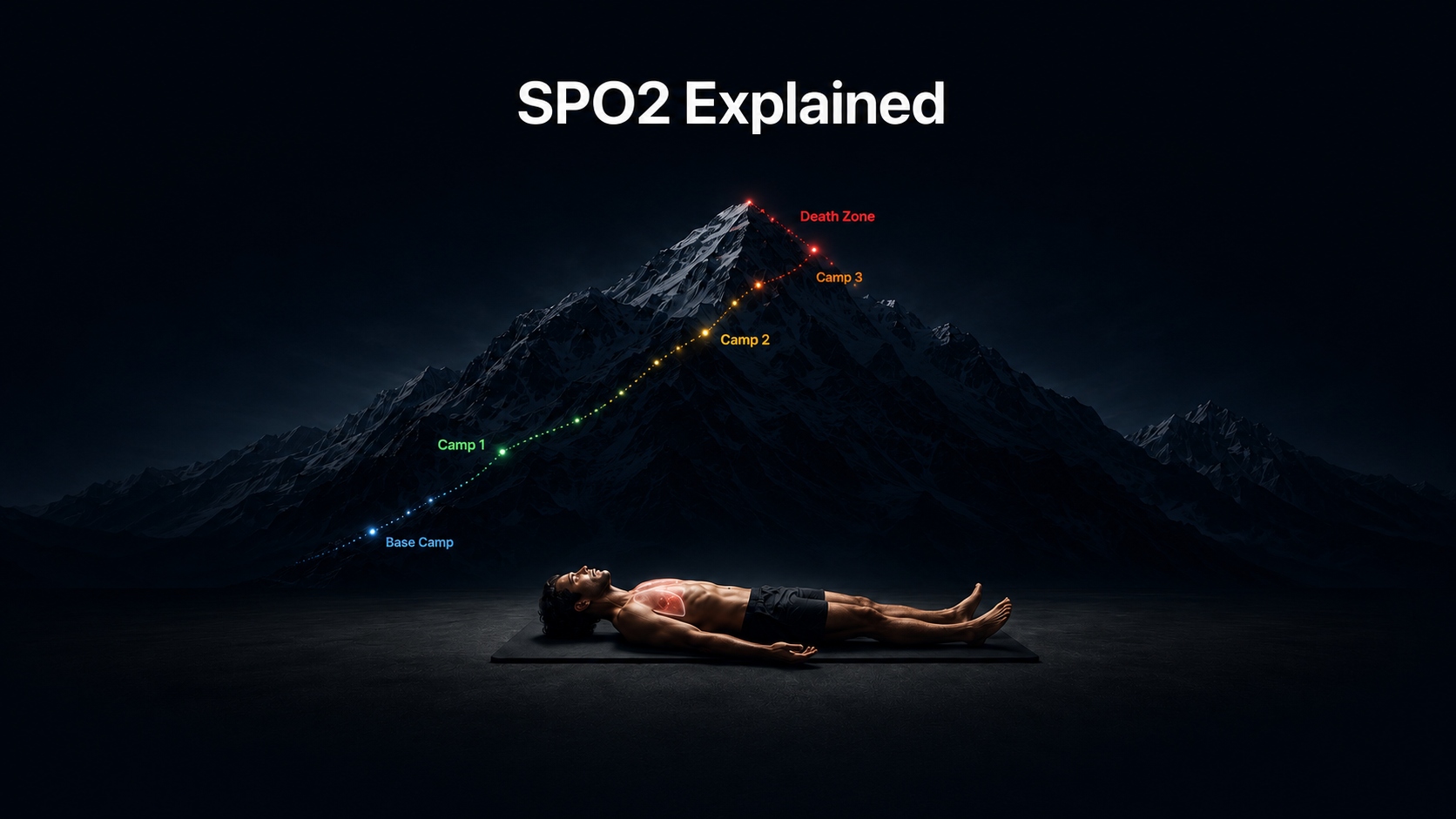
SpO₂ as an Altitude Reference
RedPlus does not change the outside environment.
It goes straight to the inside environment.
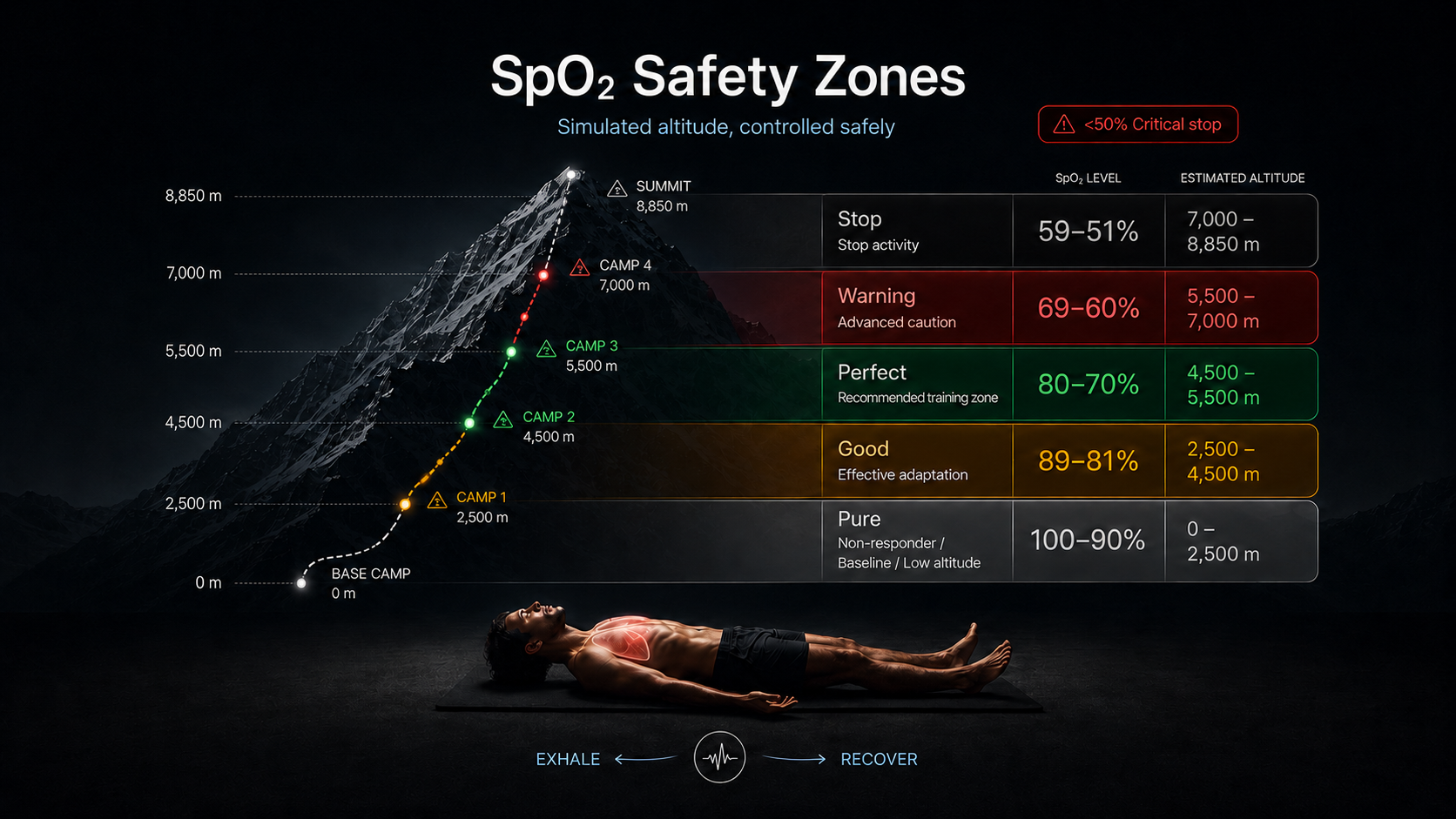
Instead of changing the air around the athlete, RedPlus measures the body’s internal oxygen response through SpO₂. The altitude zones shown here are approximate reference values that help translate measured arterial oxygen saturation into a familiar altitude-training context.
An SpO₂ response around 80–70% represents a strong hypoxic signal, roughly comparable to the oxygen stress seen around 4,500–5,500 meters.
The purpose is not to claim that RedPlus recreates altitude itself. Altitude changes the environment around you. RedPlus tracks the oxygen response inside you.
Source basis: CDC Yellow Book physiology data and Luks & Hackett, NEJM 2022; values above ~5,500 m are extrapolated.
SpO₂RedPlus ZoneApprox. Altitude Reference
59–51% 7,000–8,850 m
69–60% 5,500–7,000 m
80–70% 4,500–5,500 m
89–81% 2,500–4,500 m
100–90% 0–2,500 m
Safety note — deep SpO₂ responses
RedPlus measures arterial oxygen saturation through SpO₂. During controlled empty-lung breath-holds, SpO₂ can fall deeply, especially in trained athletes.
Some experienced users may occasionally reach values below 70%, and rare highly trained users may go lower. However, low SpO₂ should never be treated as a competition or a target. The goal is not to reach the lowest possible number, but to create a controlled and repeatable hypoxic stimulus.
The recommended working zone is 80–70% SpO₂. Values below this range should be treated with caution, and values around 60% or lower should be considered a stop zone.
Deep hypoxia can cause light-headedness, warmth, tingling, relaxation, euphoria, confusion, loss of coordination or, in extreme cases, blackout. Because pulse oximeter readings may lag behind the actual physiological response, users should stop early, recover fully and never chase maximum depth.
RedPlus sessions should only be performed lying down or seated, never while standing, exercising, cycling, swimming, driving or operating equipment.
Users with heart, lung, cardiovascular, neurological or fainting-related conditions should seek medical advice before using RedPlus.
80–70%: Recommended training zone / green zone.
69–60%: Advanced caution zone. Stop pushing. Recover fully.
59–51%: Stop zone. No chasing. Session should end or be strongly limited.
<50%: Critical stop. Not a target. Requires strict supervision / should not be pursued.