
Who Is RedPlus For?

If your sport depends on endurance, recovery or VO₂max, RedPlus is relevant to you.
RedPlus is designed for athletes who want a measurable way to train hypoxic response, oxygen control and recovery.
Endurance Sports
Cycling, running, triathlon, rowing, swimming, cross-country skiing and biathlon.
VO₂max-Dependent Sports
Football, handball, hockey, tennis and combat sports — where repeated efforts, aerobic capacity and recovery matter.
Athletes, Coaches & Teams
Built for ambitious amateurs, elite athletes, masters athletes, coaches and performance teams.
From juniors to masters. From amateurs to elite. If performance matters, RedPlus can be relevant.
RedPlus Research Team
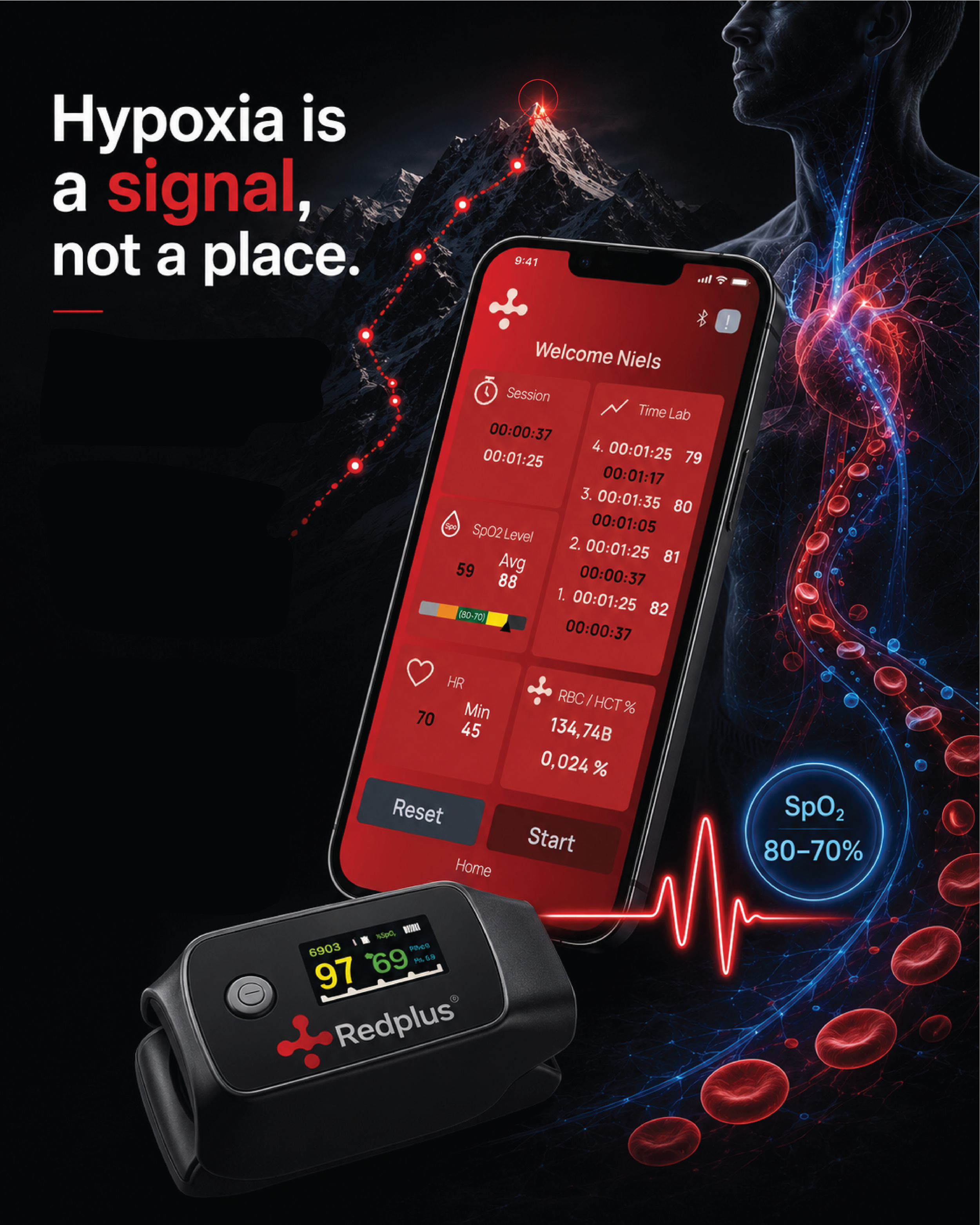
Hypoxia Is a Signal, Not a Place
Altitude changes the environment around you.
RedPlus targets the oxygen response inside you.
RedPlus takes a different approach: it targets the internal oxygen response directly.
As sports scientist Daniel Healey puts it on behalf of RedPlus:
“RedPlus is not changing the outside environment. RedPlus going straight for the inside environment.”
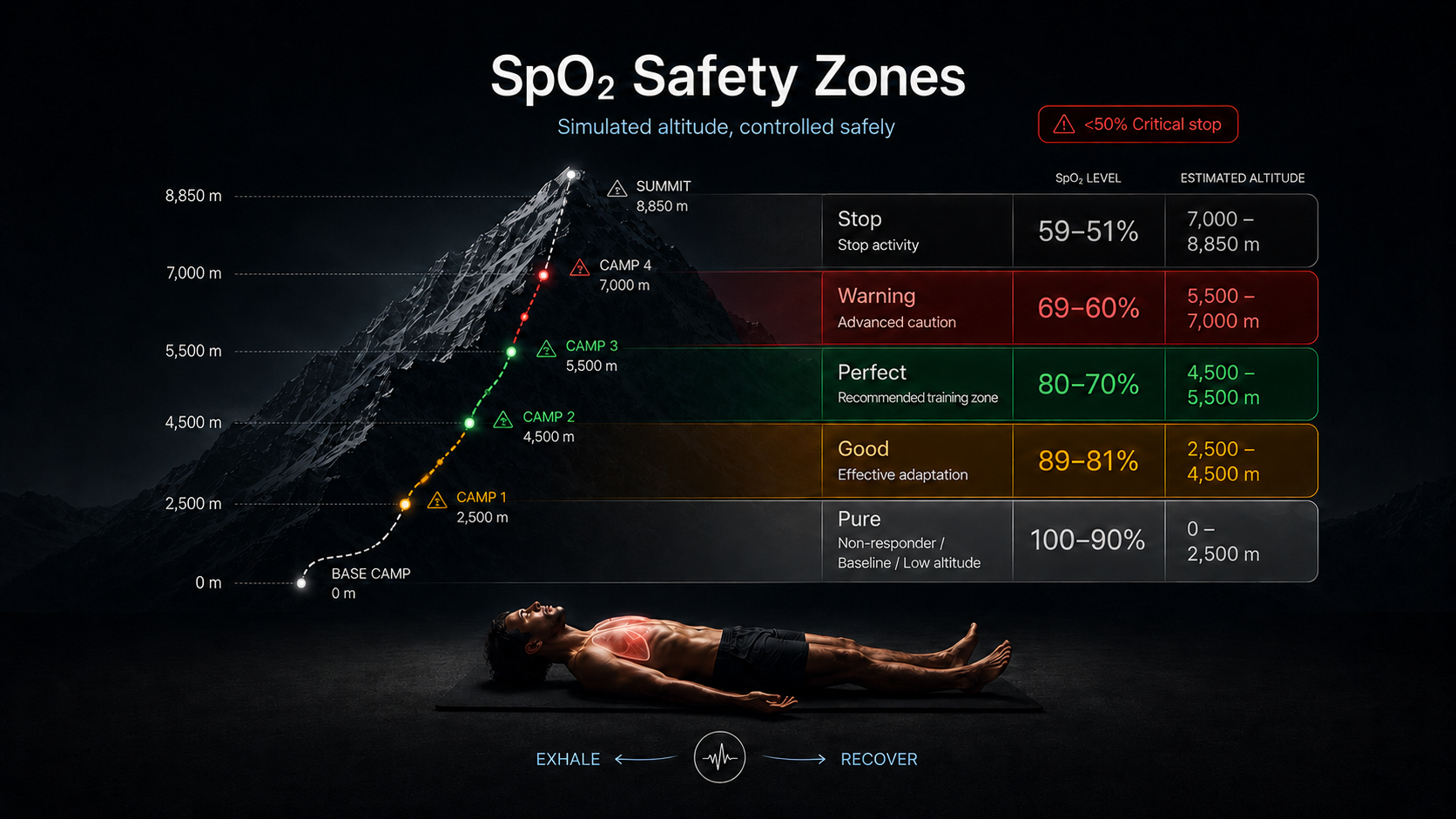
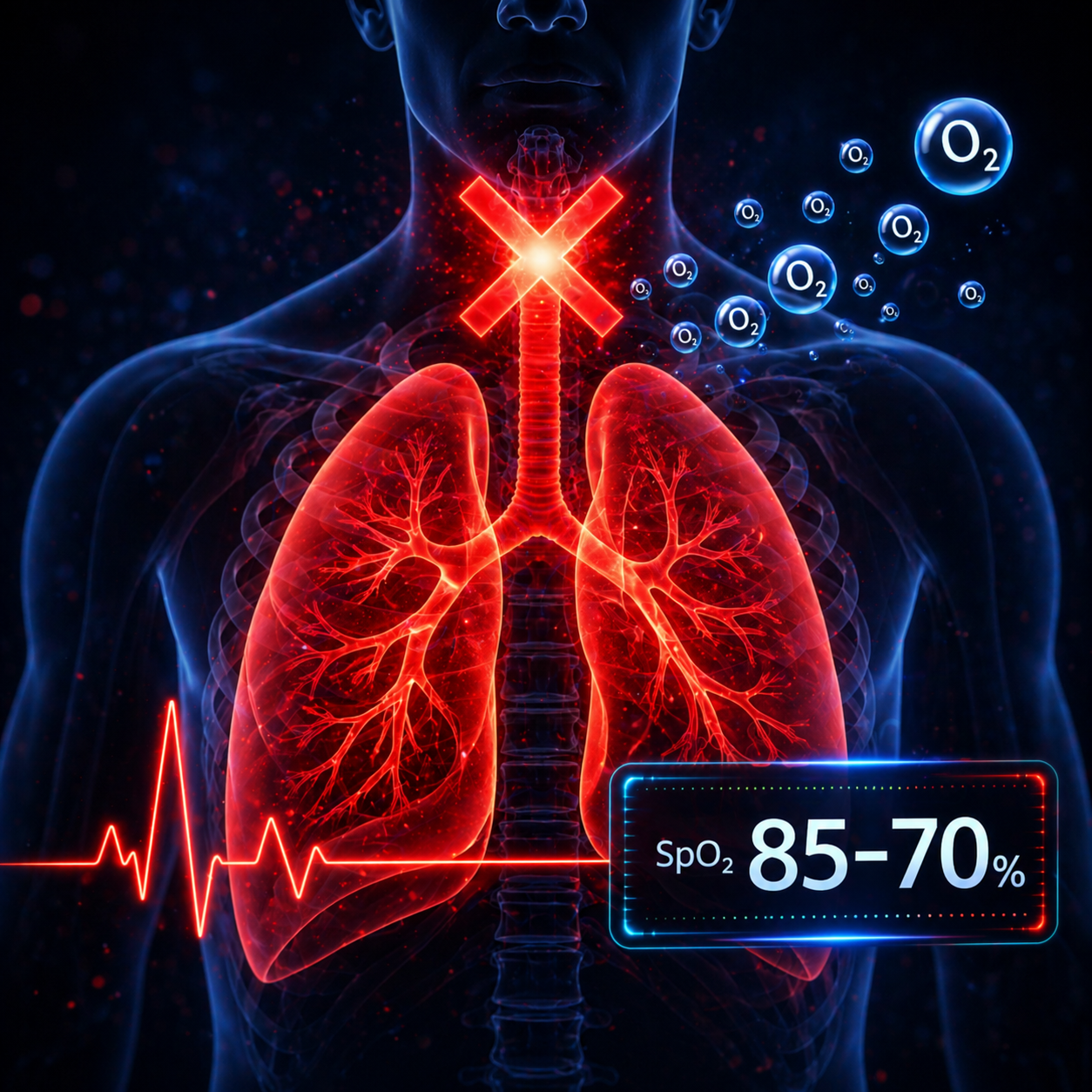
The idea is simple: hypoxia is not only about where you are. It is a physiological signal. When arterial oxygen saturation (SpO₂) is driven low enough, oxygen-sensing pathways such as HIF-1α are activated, supporting EPO signalling and red blood cell adaptation.
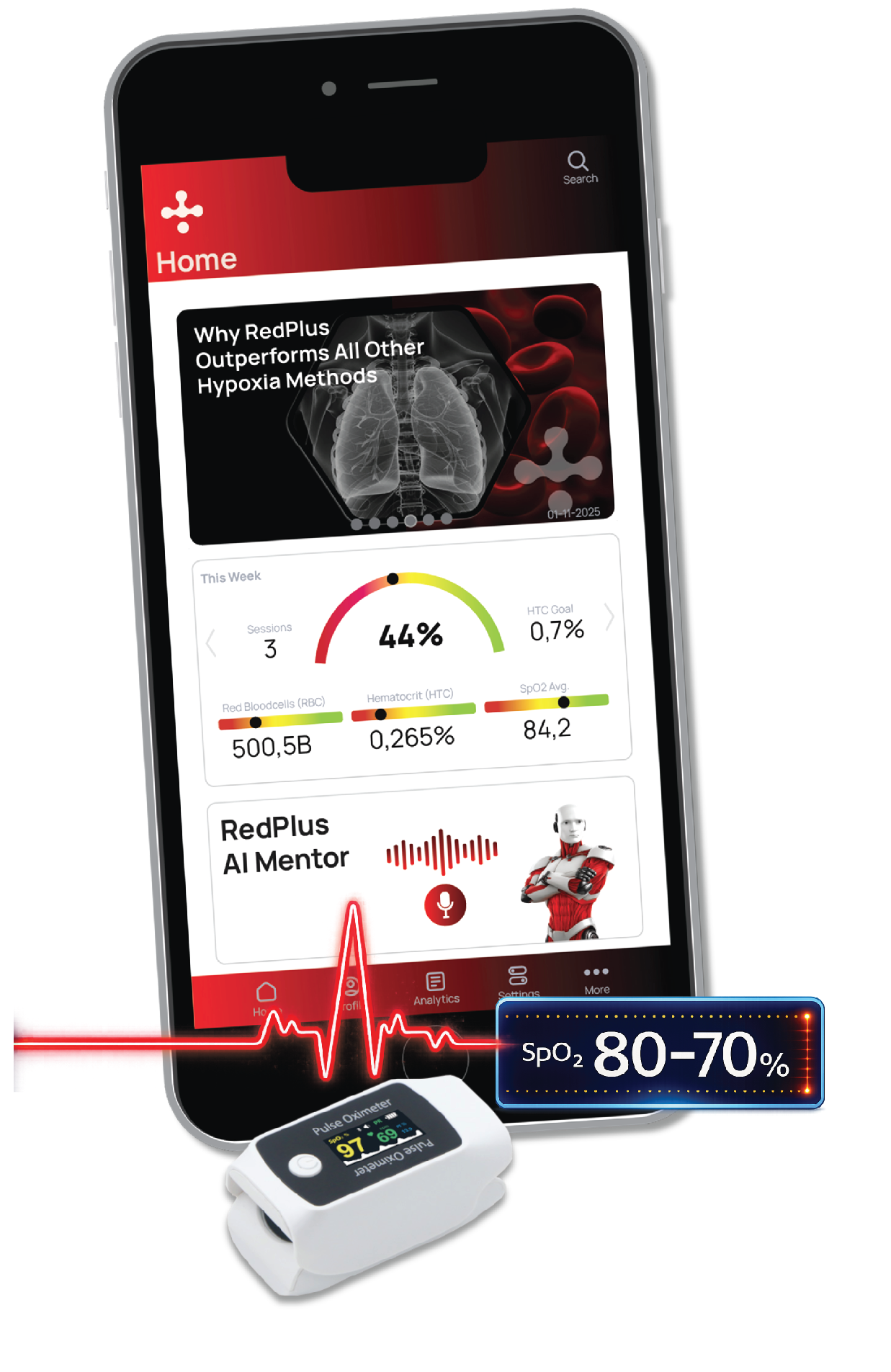
RedPlus is built to create, measure and repeat that signal through controlled empty-lung breath-holds, live SpO₂ tracking and weekly targets.
“Low SpO₂ is where RedPlus believes the real adaptation signal begins.”
Niels Kristian Andersen - RedPlus Performance
Why Use the RedPlus App?
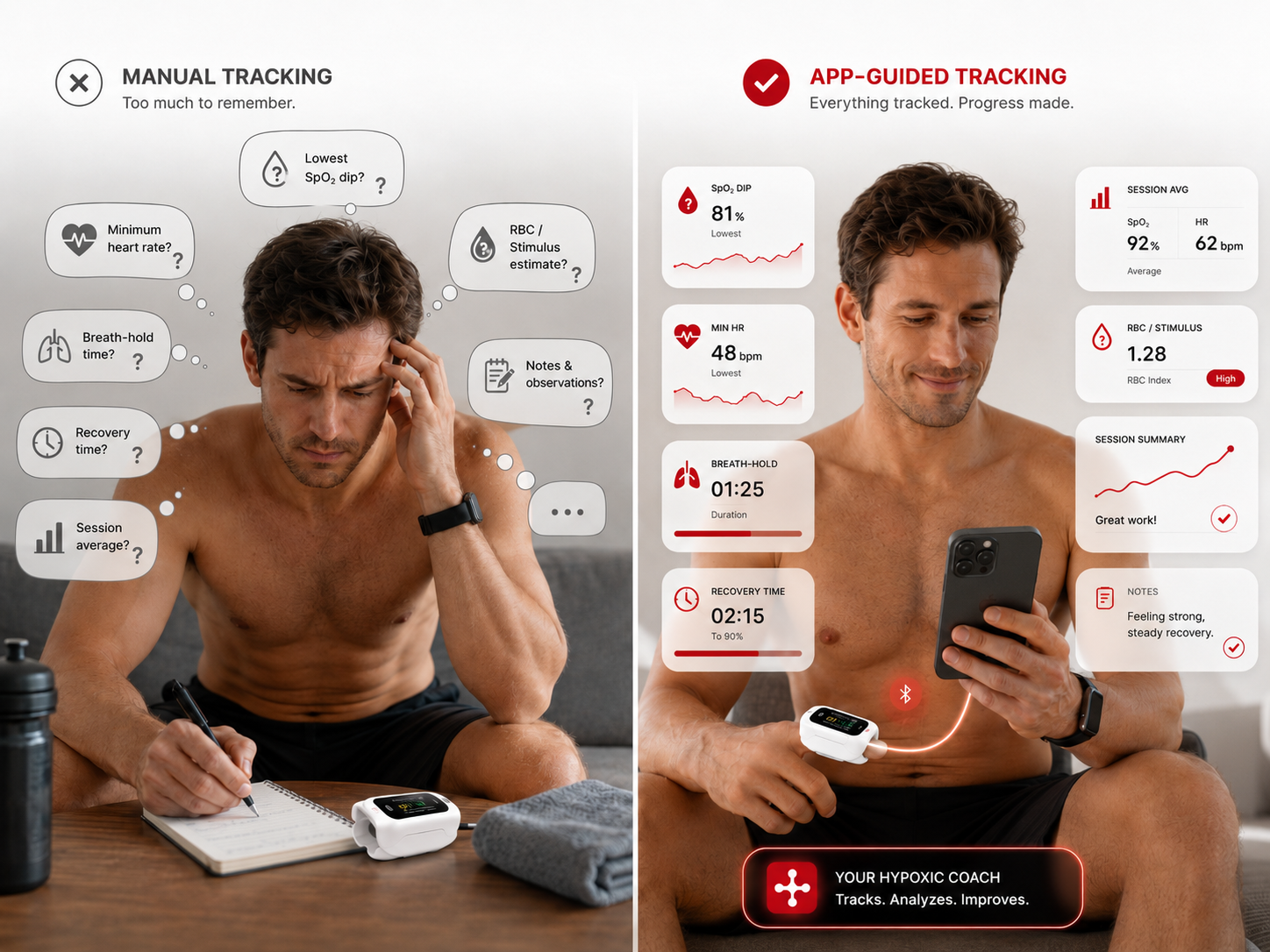
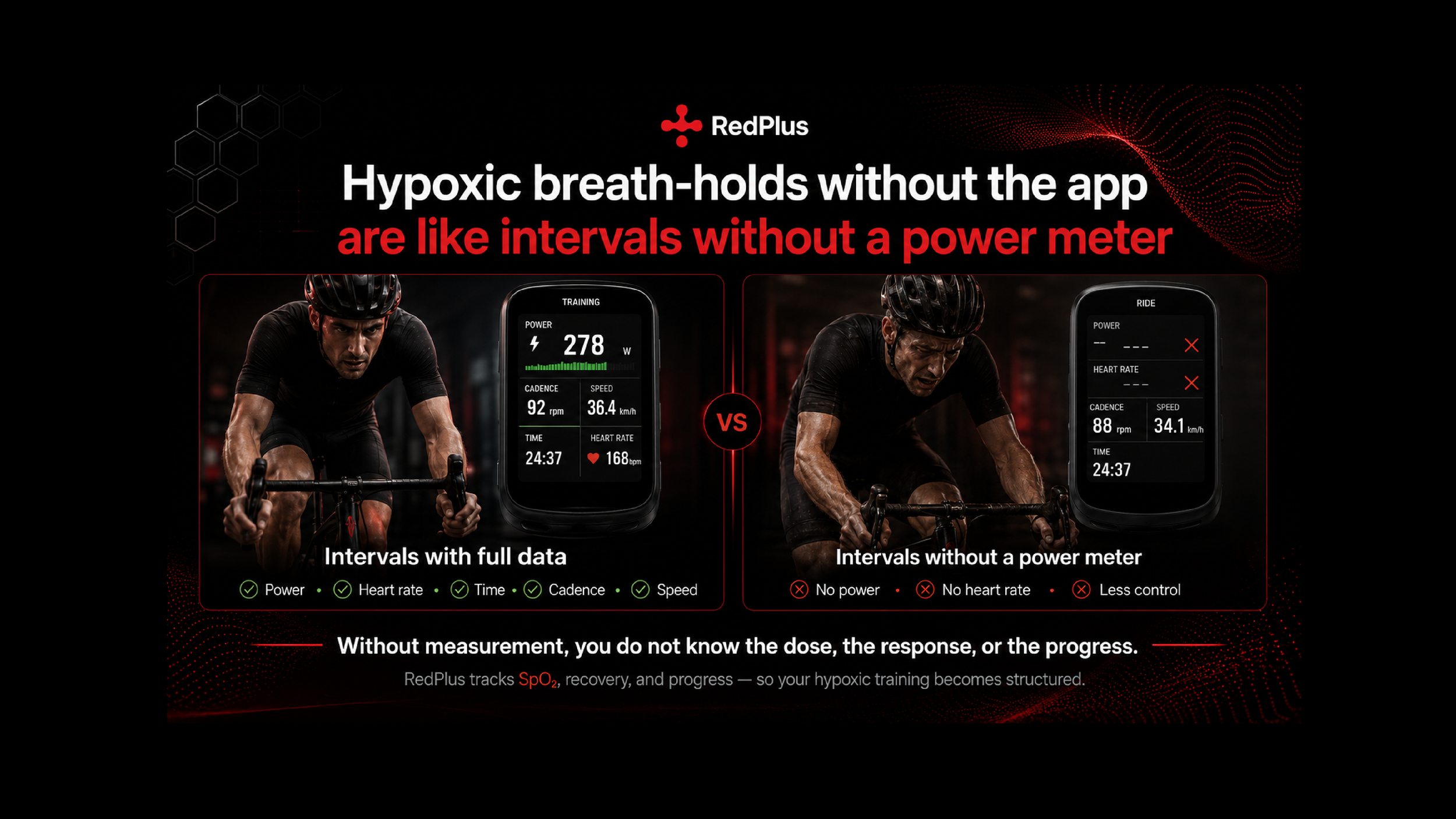
Hypoxic breath-holds without the app are like intervals without a power meter.
You may do the work
But you do not know the real dose
You may miss the lowest SpO₂ dip
You do not track live averages across the session
You waste recovery time writing notes
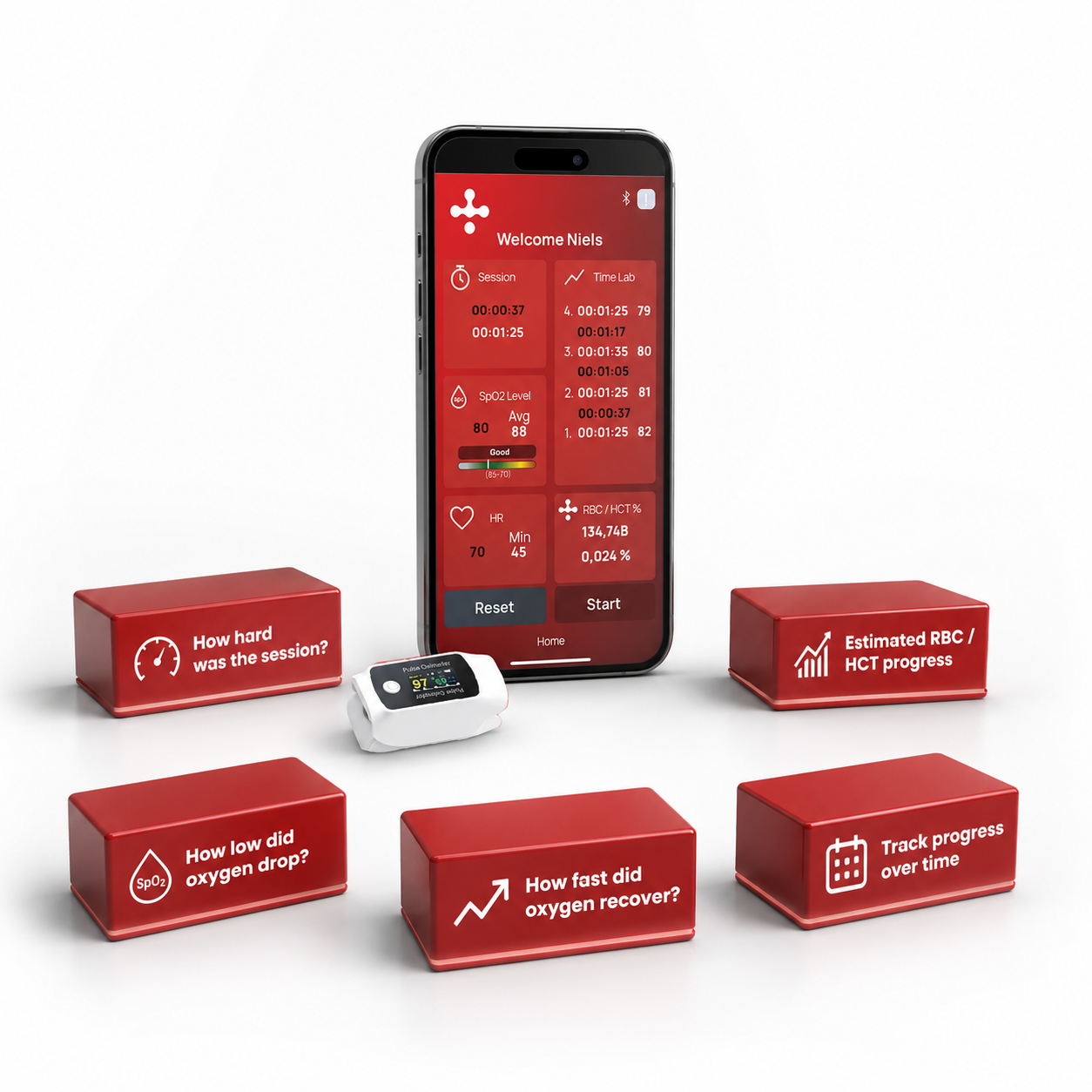
RedPlus tracks it automatically:
SpO₂ dip, minimum heart rate, breath-hold time, recovery time, live averages, and session history.
Quote: “It’s like having a little lab for your breathing. Instead of guessing what’s happening, you can see the data and adjust as you go.”
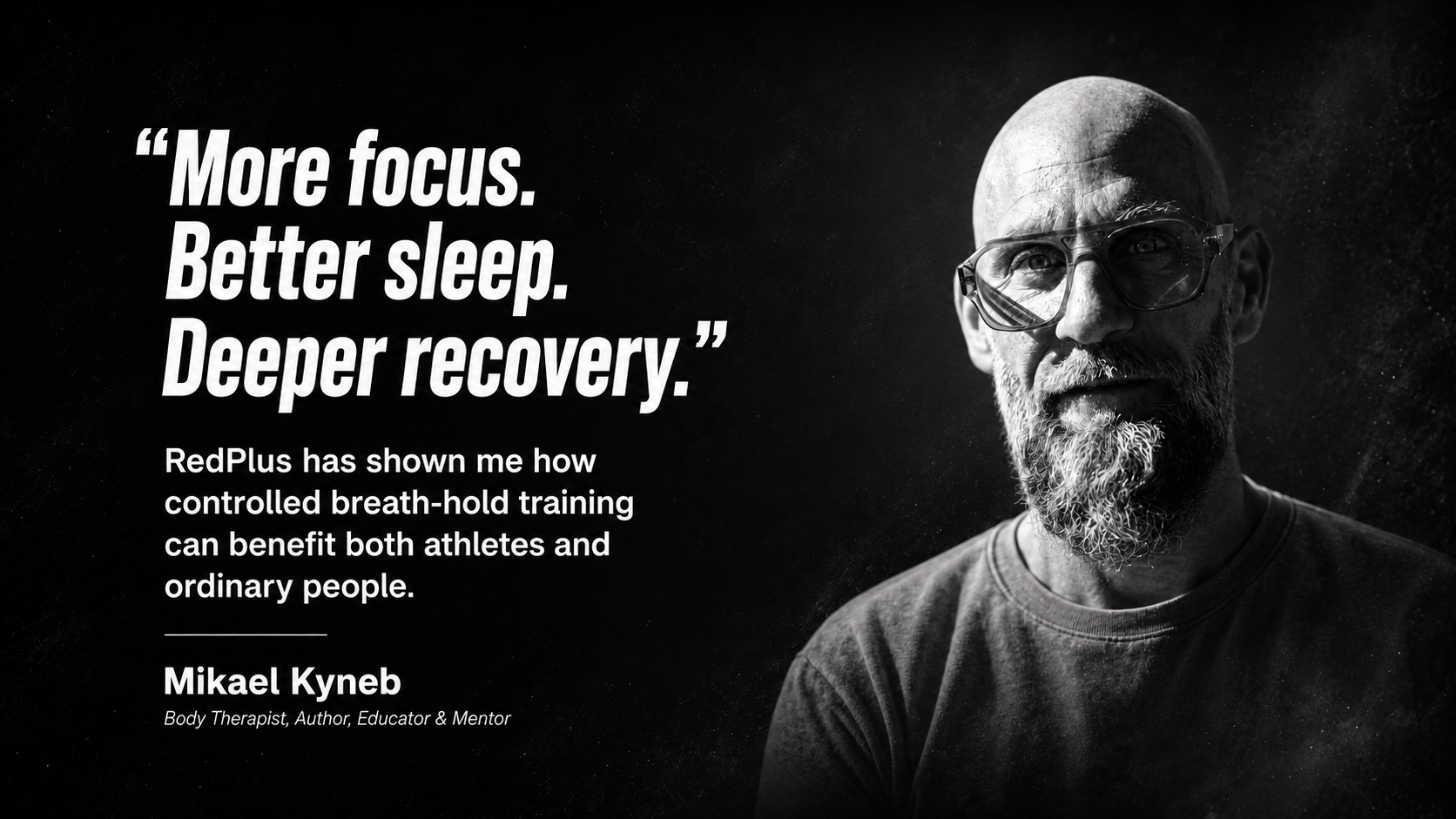
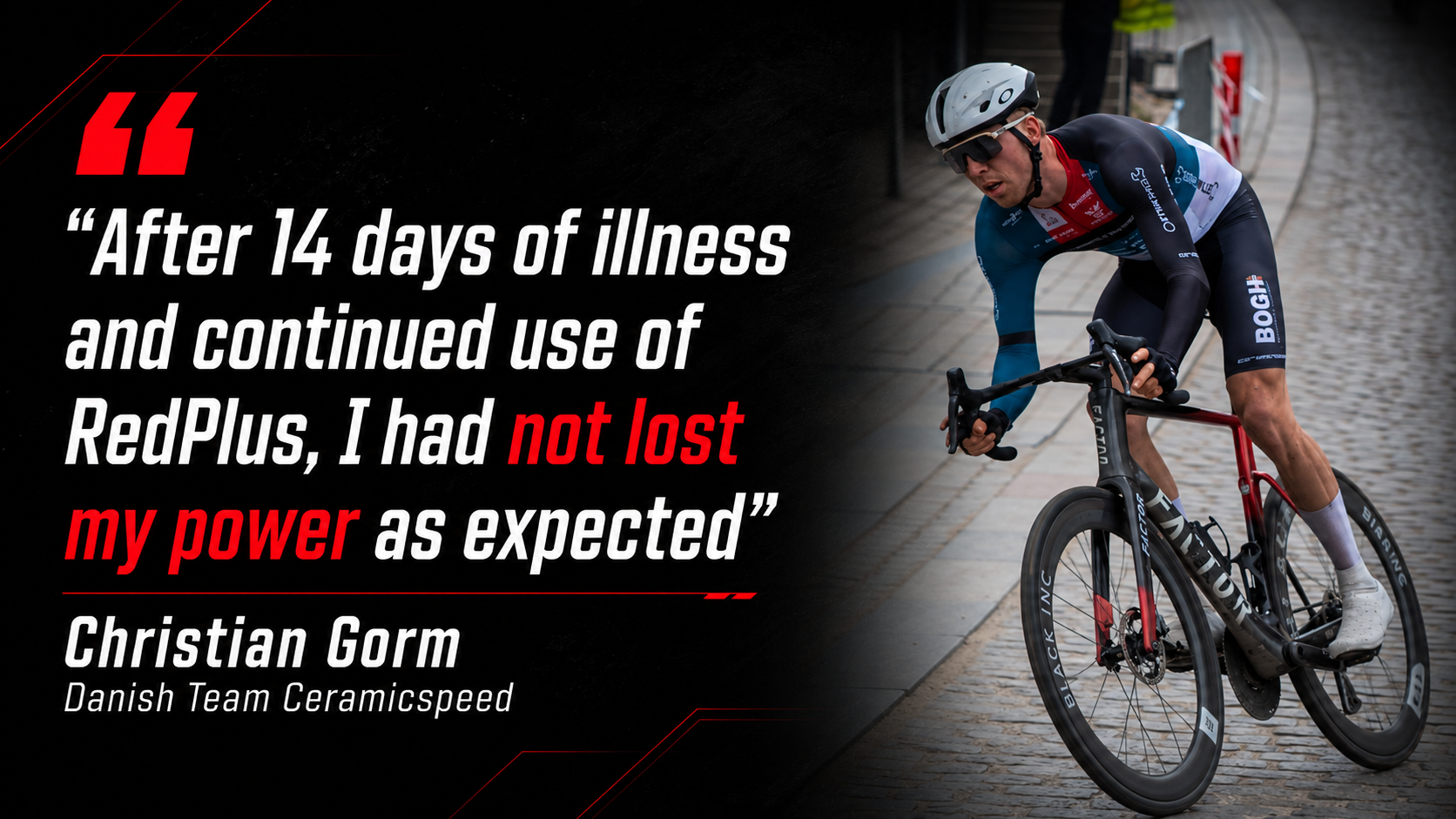
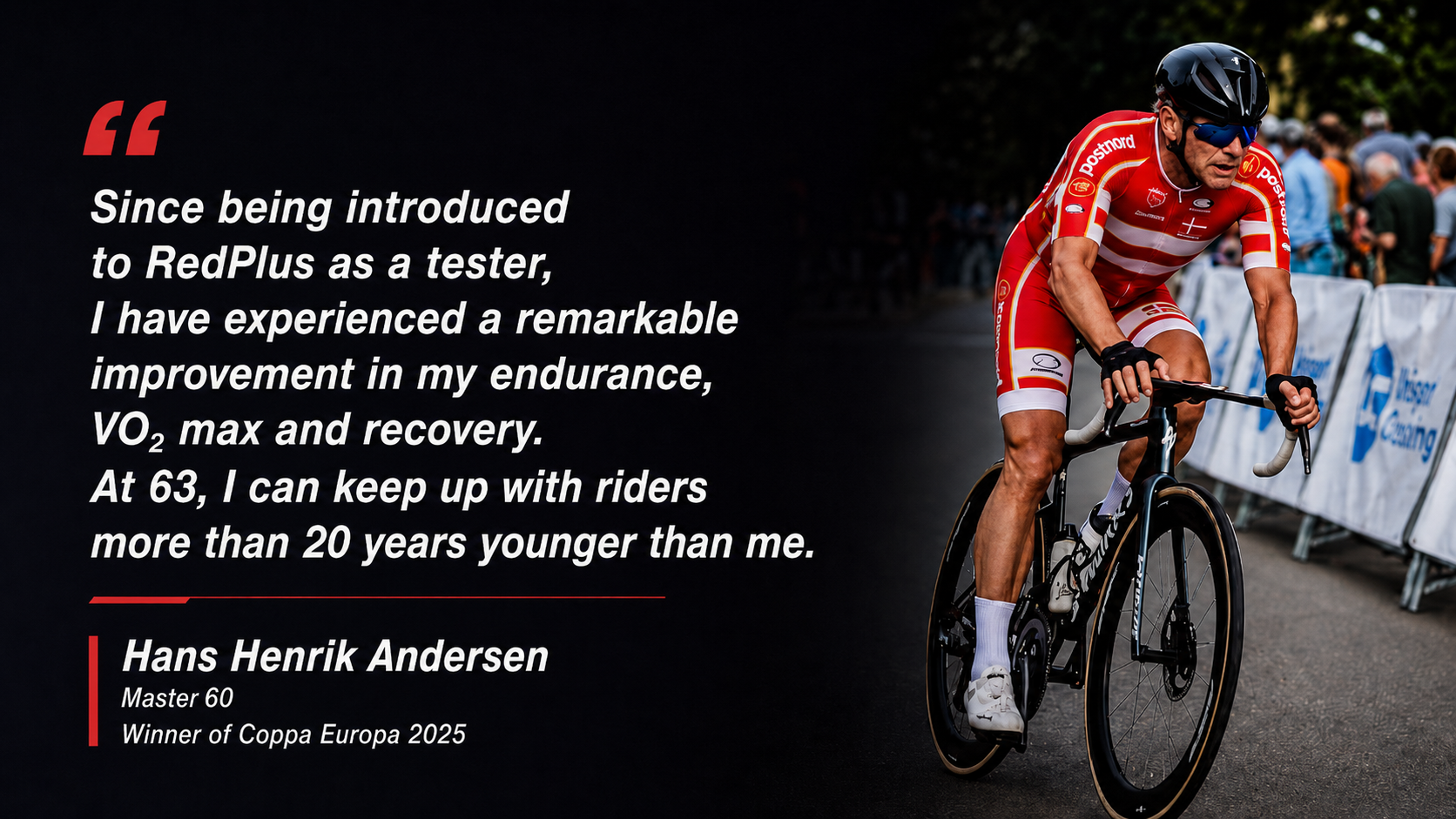
What the people say…
RedPlus Turns Hypoxia Into Performance Gains
Activate RBC Production
Structured hypoxic breath-holds are designed to trigger the body’s natural EPO response and support red blood cell production.
RedPlus guides each session so the protocol becomes controlled, measurable, and easier to repeat.
Measure the Hypoxic Session
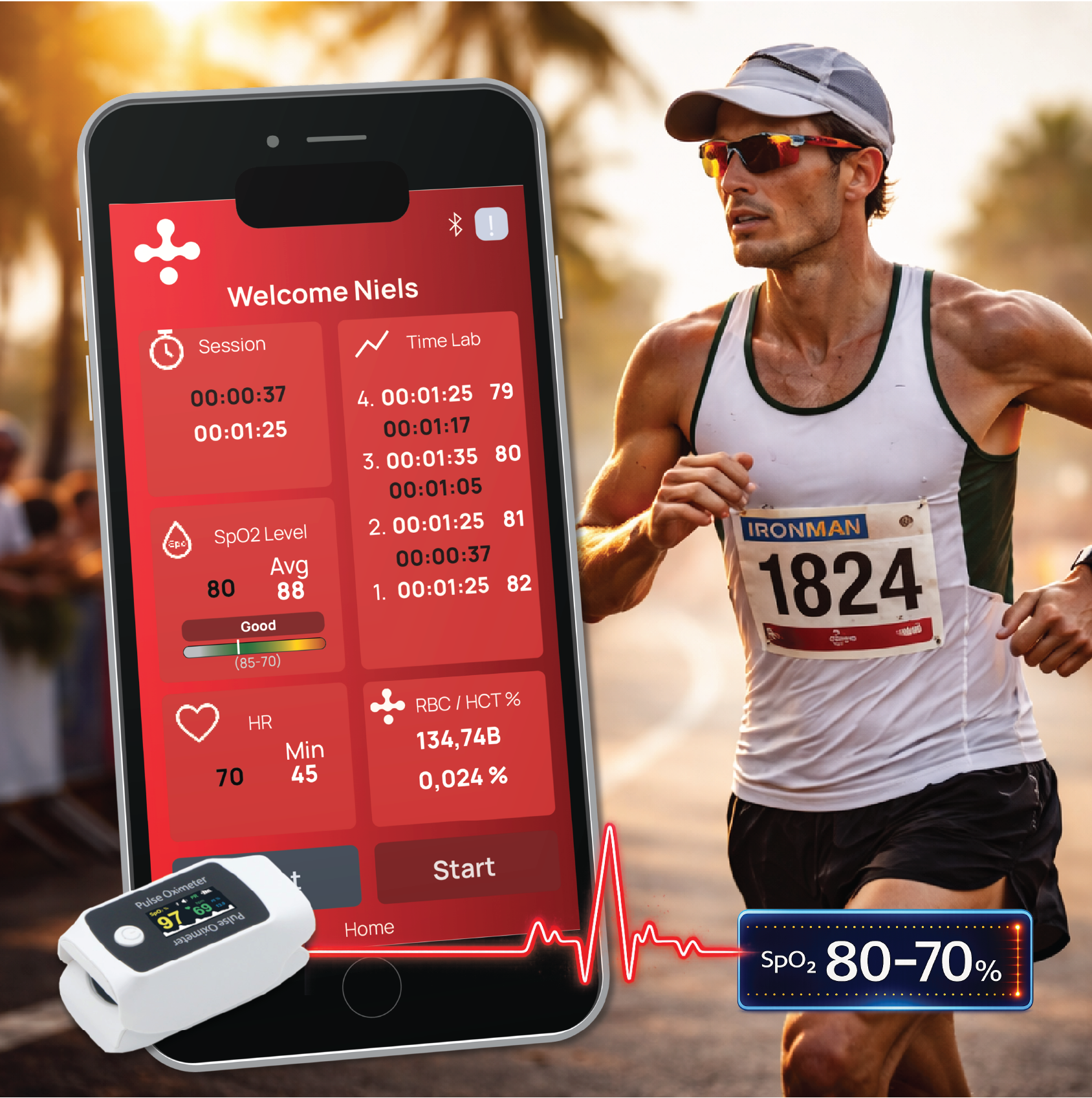
The app tracks SpO₂ drop, lowest SpO₂ value, average SpO₂ across repetitions, and recovery time after each repetition.
It also follows weekly progression in estimated RBC / HCT output — without manual notes or guesswork.
Improve Performance Over Time
RedPlus helps athletes and coaches follow progression, recovery, fatigue response, and adaptation as part of the daily training routine.
By turning hypoxic sessions into structured data, RedPlus helps make performance development more measurable and easier to manage.
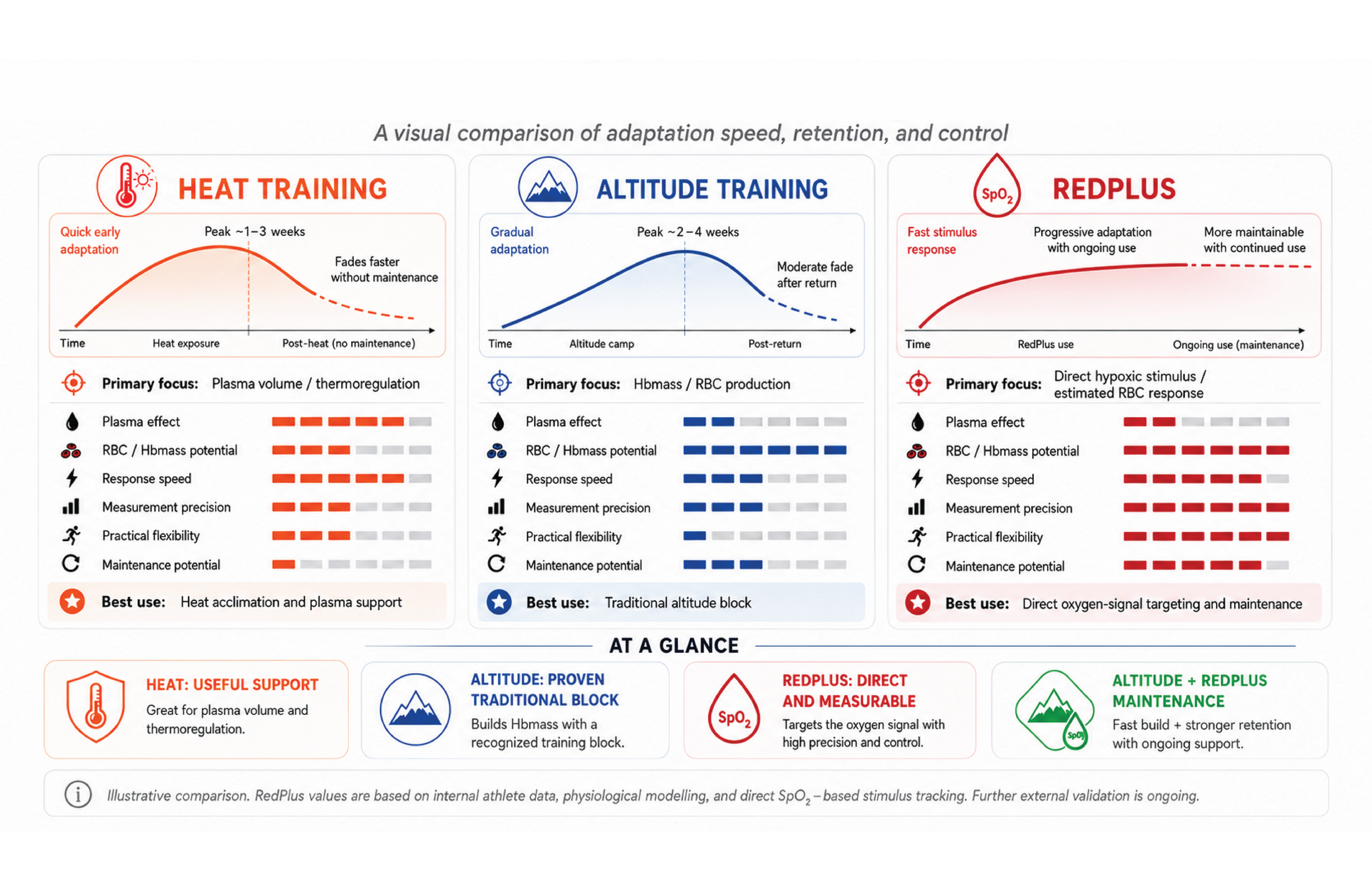
Heat Training vs. Altitude Training vs. RedPlus
RedPlus: The More Measurable Adaptation Tool
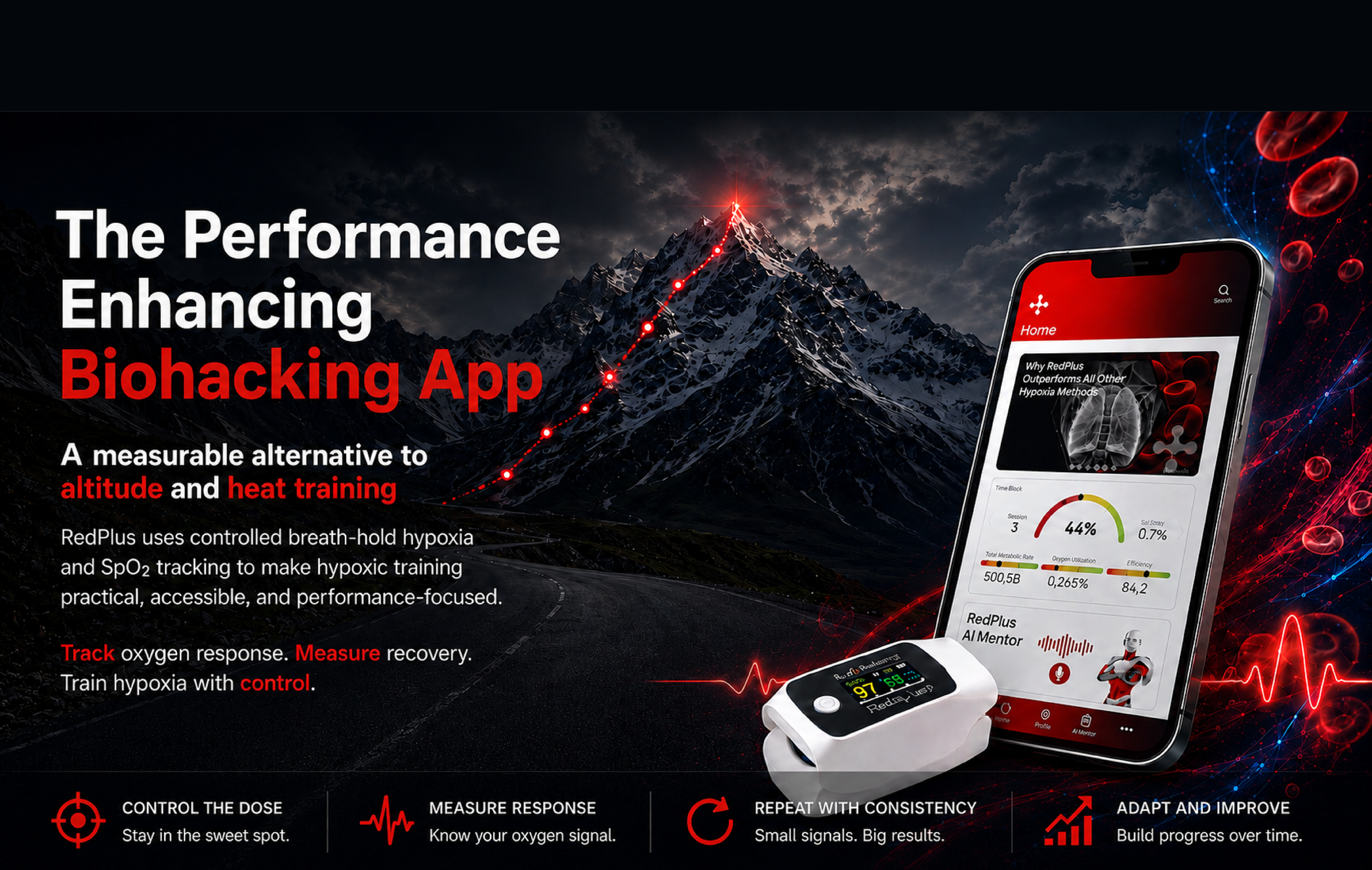
RedPlus is built to do what altitude training tries to achieve — trigger oxygen-related adaptation — but with more control.
The comparison shows RedPlus matching altitude training on estimated RBC / Hbmass potential, while outperforming both heat training and altitude training on measurement precision, practical flexibility, dose control, and maintenance potential.
Heat training remains useful for plasma volume and thermoregulation. Altitude training remains a proven traditional method. But RedPlus gives athletes and coaches a direct way to target, measure, repeat, and maintain the oxygen stimulus over time.
This is the RedPlus advantage:
Altitude changes the environment. Heat stresses the body. RedPlus targets the oxygen signal directly.
Sources
Oberholzer et al. — heat acclimation, plasma volume and possible Hbmass effects.
Bonato et al. — live high-train low altitude training and endurance performance adaptations.
Saunders et al. — relationship between Hbmass changes and VO₂max after hypoxic exposure.
de Bruijn, Richardson & Schagatay — repeated apneas increased EPO concentration, with an average maximum increase of 24%.
Research note:
This comparison is based on published research on heat acclimation, plasma-volume adaptation, altitude training, Hbmass/red-cell adaptation and repeated-apnea EPO response. RedPlus values are based on SpO₂-based stimulus tracking, internal athlete data and physiological modelling. Sports scientist Daniel Healey has reviewed and supported the scientific rationale behind the referenced research and its relevance to the RedPlus model. Further external validation is ongoing.
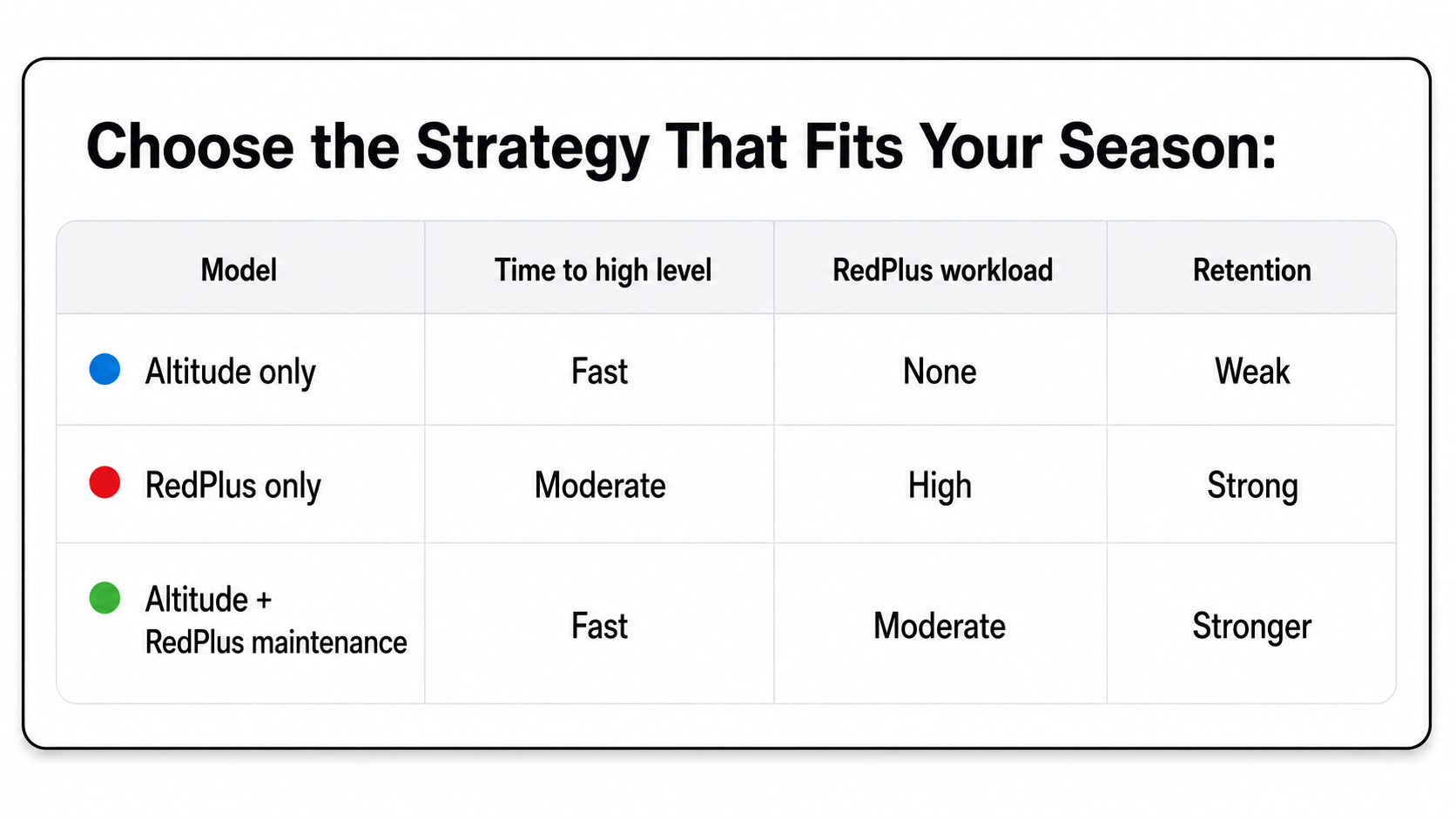
Altitude, RedPlus or Both?
Compare how altitude training, RedPlus-only and combined maintenance strategies build, peak and preserve adaptation over time.
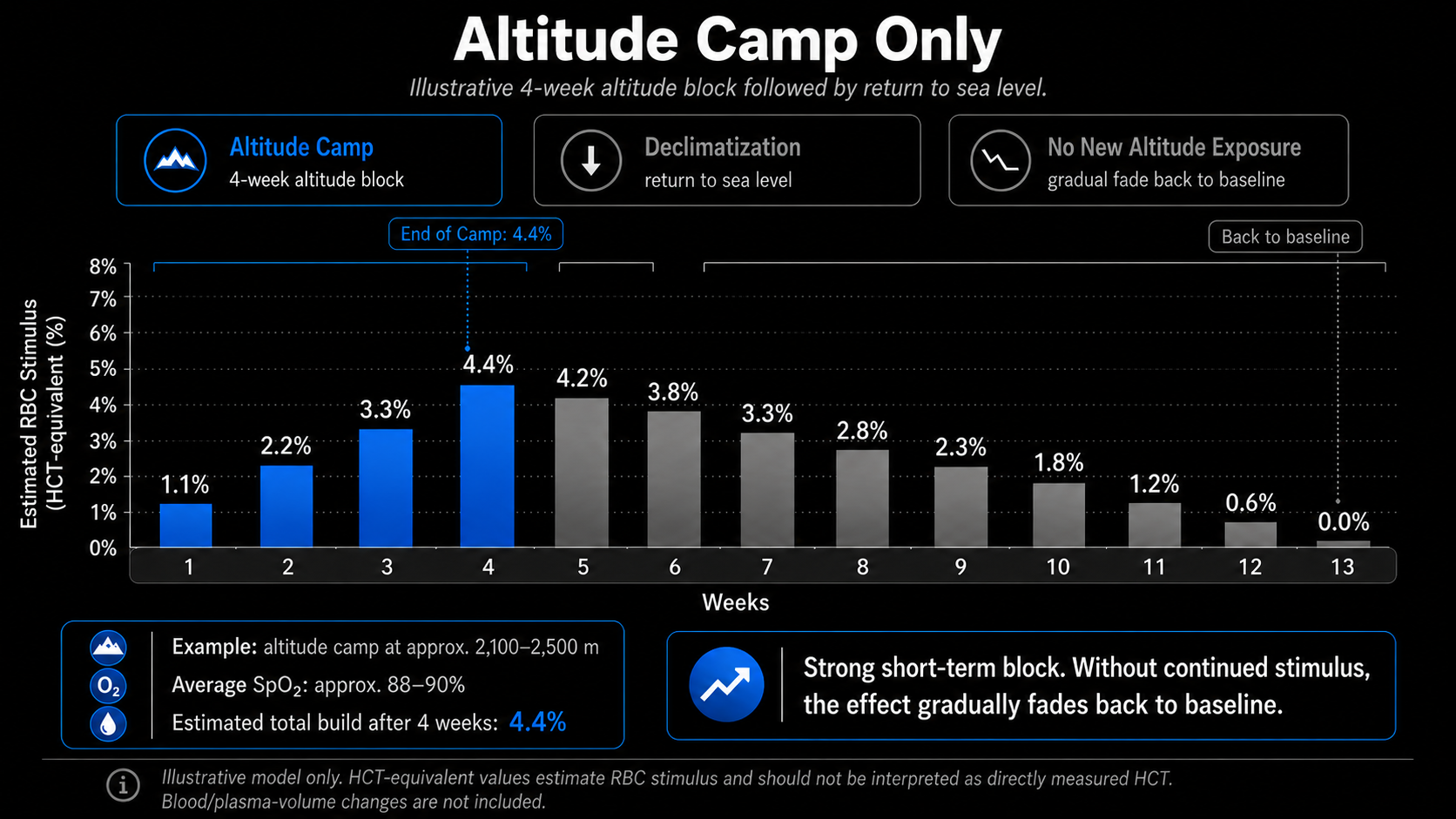
Altitude training can create a strong short-term adaptation over a few weeks.
But after returning to sea level, the effect gradually fades if no new hypoxic stimulus is added.
This makes altitude camps powerful, but also difficult to maintain through a long season without repeated camps or follow-up strategies.
Key point:
Fast build. Gradual fade.
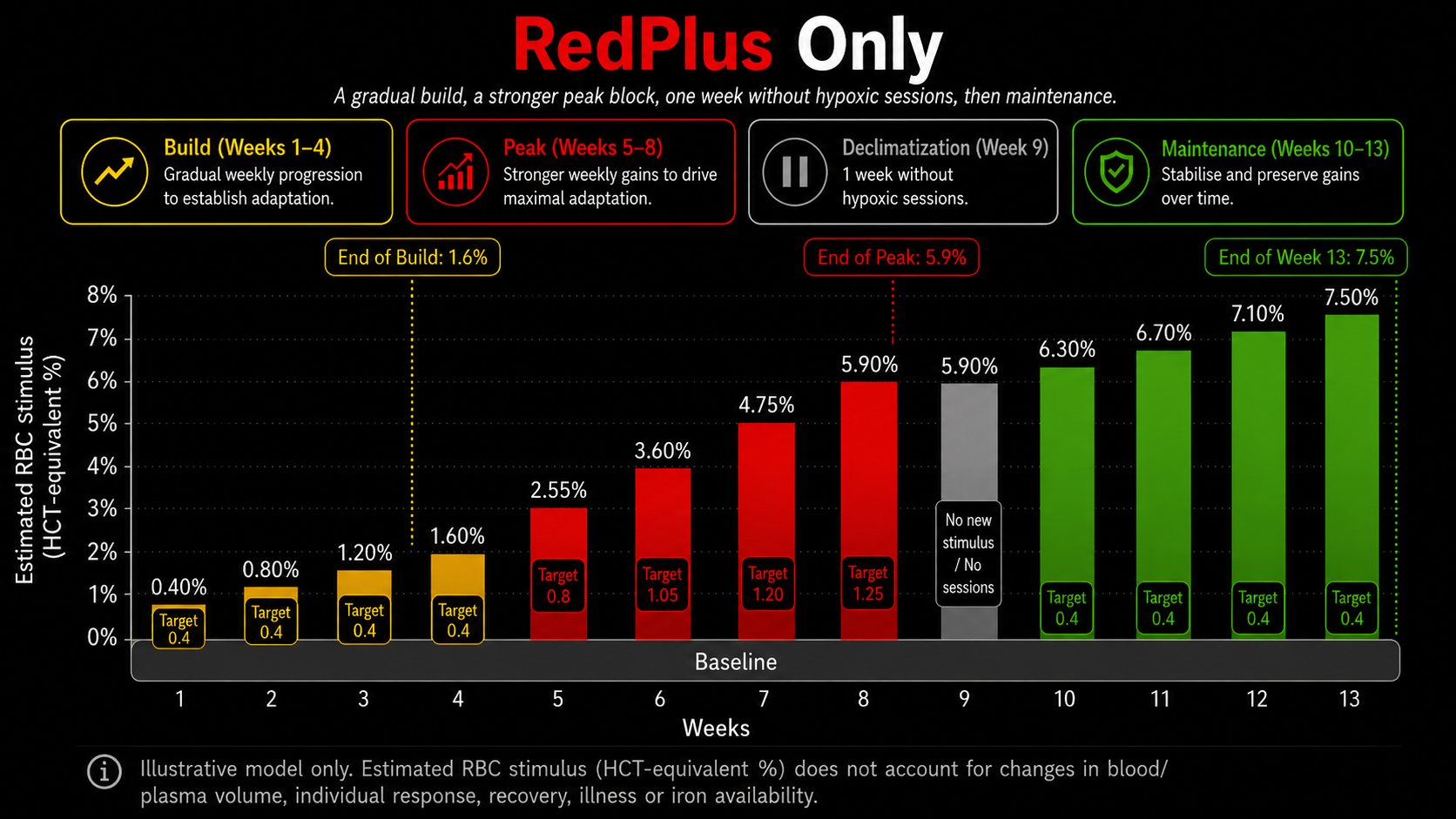
RedPlus builds hypoxic adaptation through repeated, measurable weekly dose.
The athlete starts with a stable build phase, increases the dose during a peak phase, takes a short break, and then maintains the effect with a lower weekly target.
Unlike a one-time altitude block, RedPlus can be repeated and adjusted throughout the season.
Key point:
Build, peak and maintain — without leaving home.
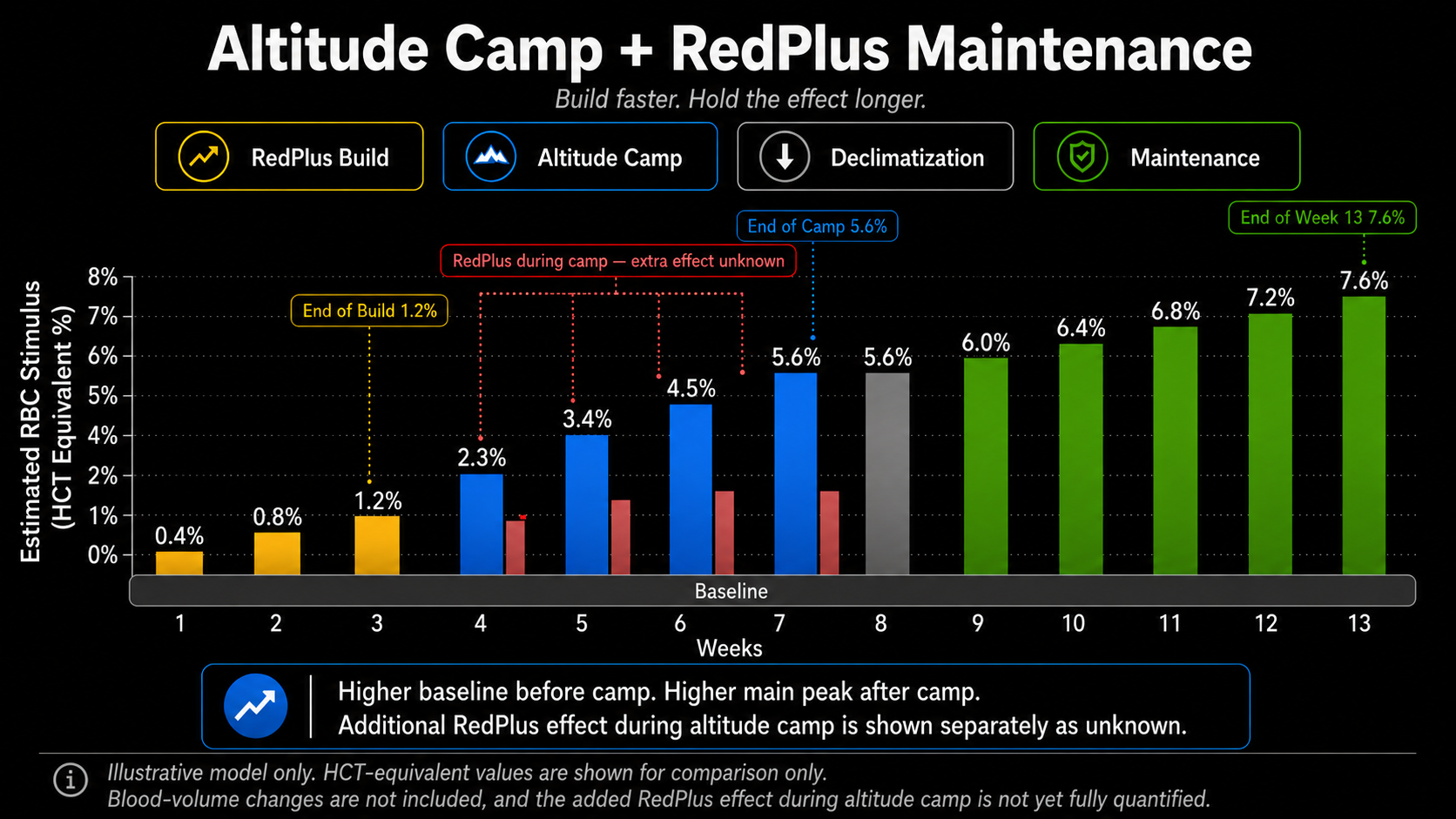
Altitude camp builds quickly, but the effect can fade after return to sea level.
Adding RedPlus before and after camp may help raise the starting point and preserve the adaptation for longer.
Additional note:
The added RedPlus effect during altitude camp is still unknown, but in our own testing above 2,100 m altitude, we observed a markedly increased estimated RBC stimulus during hypoxic sessions.
Key point:
Use altitude to build fast — use RedPlus to help hold the gain.
Built on Hypoxia Science. Designed for Performance.
RedPlus is based on the same biological principles that make altitude training relevant:
Reduced oxygen availability, measurable oxygen stress, and the body’s adaptive response.
With controlled breath-hold hypoxia and SpO₂ tracking, RedPlus makes this stimulus practical, measurable, and easier to repeat — without altitude camps, heat blocks, or complex equipment.

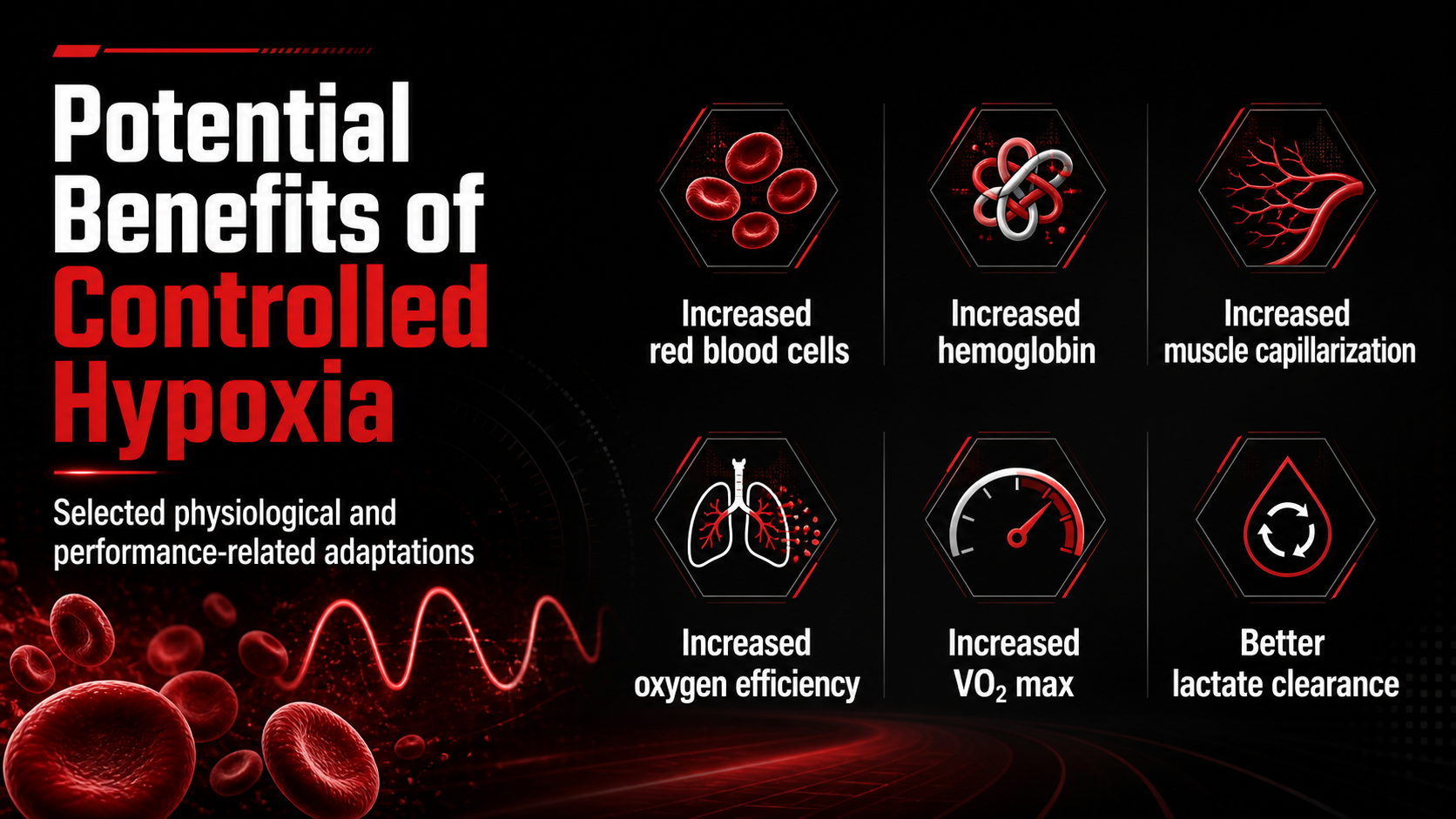
Science-Based Benefits of Hypoxic Training
Performance benefits
Support red blood cell and hematocrit adaptation
Improve oxygen efficiency and VO₂max potential
Track SpO₂ drop and recovery time after each session
Build CO₂ tolerance and mental resilience
Support fatigue resistance and lactate clearance
Give athletes and coaches a clearer recovery-versus-fatigue signal
Altitude-Inspired Hypoxic Planning
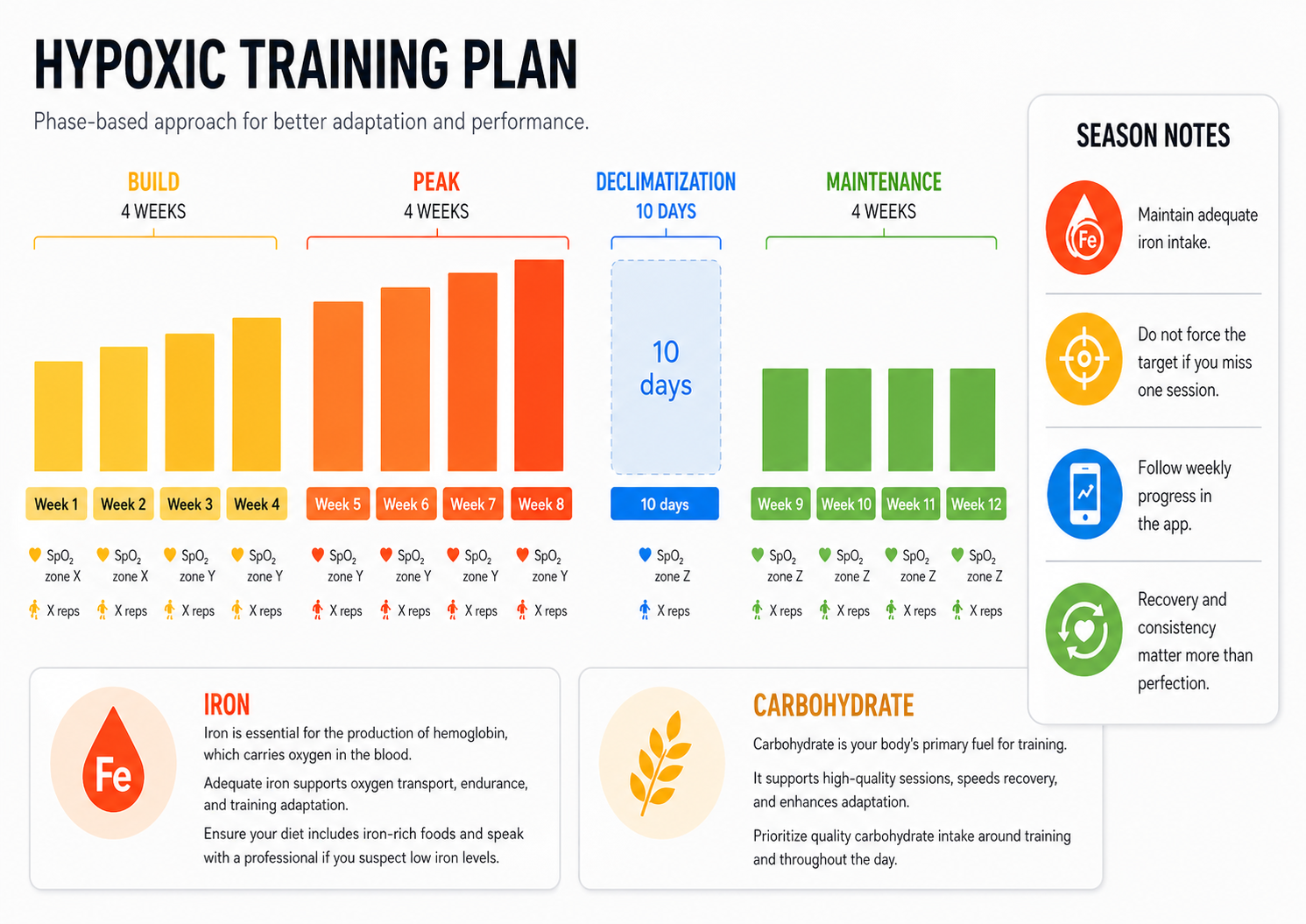
RedPlus structures hypoxic exposure in phases inspired by altitude training: Build, Peak, Declimatization, and Maintenance.
This example applies when an athlete has time to prepare for a target event — and later wants to maintain the stimulus or plan new peaks through the season.
Build
Stable repetitions at controlled SpO₂ levels, designed to build the hypoxic stimulus without going too deep.
Peak
A progressive increase in repetitions and sessions, used to intensify the stimulus before a target event.
Declimatization
A short break from hypoxic exposure, inspired by the post-altitude phase after an altitude block.
Maintenance
Lower-volume sessions in a stable rhythm, used after declimatization to maintain the stimulus through the season.