
How Long Does It Last?
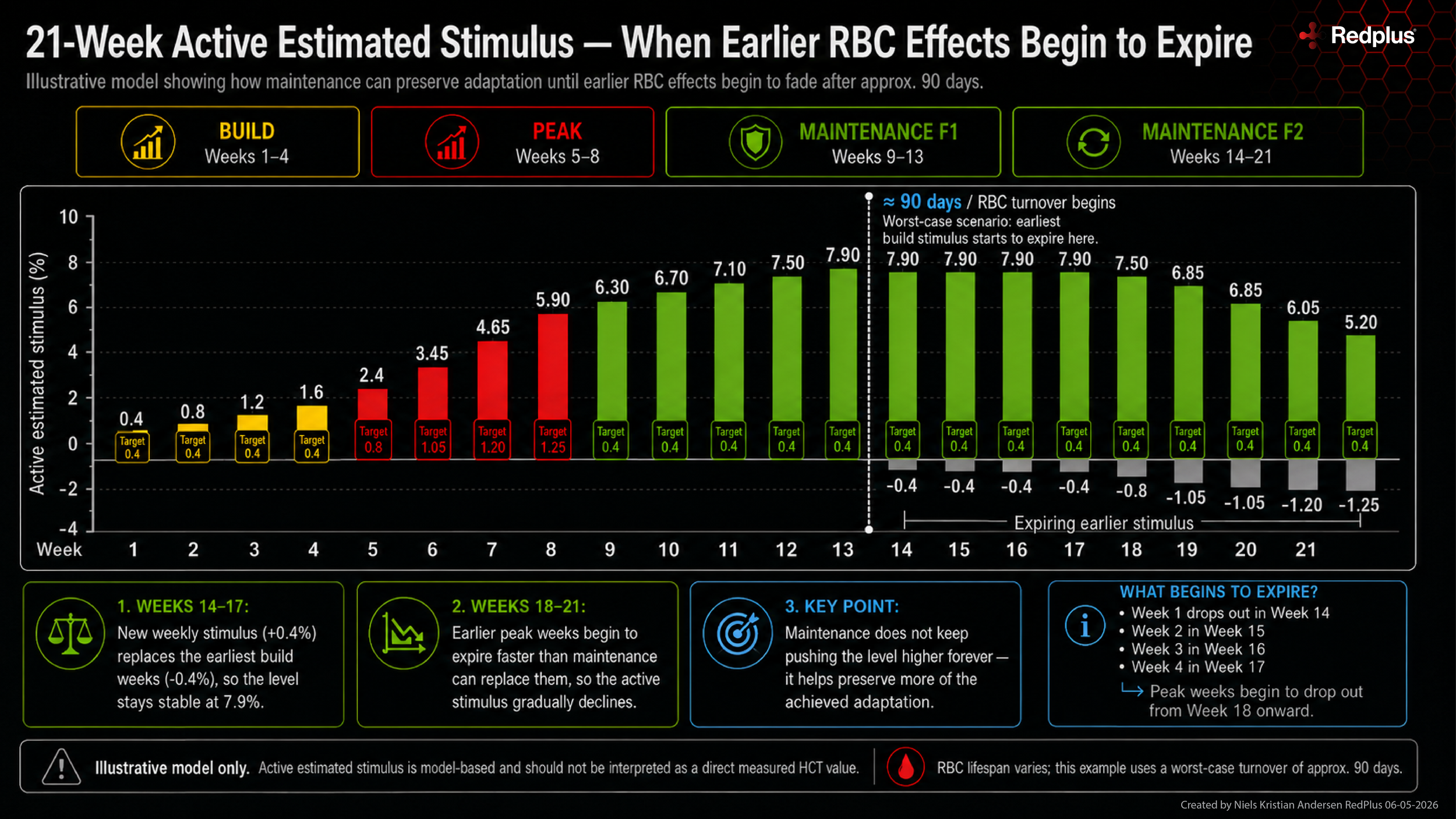
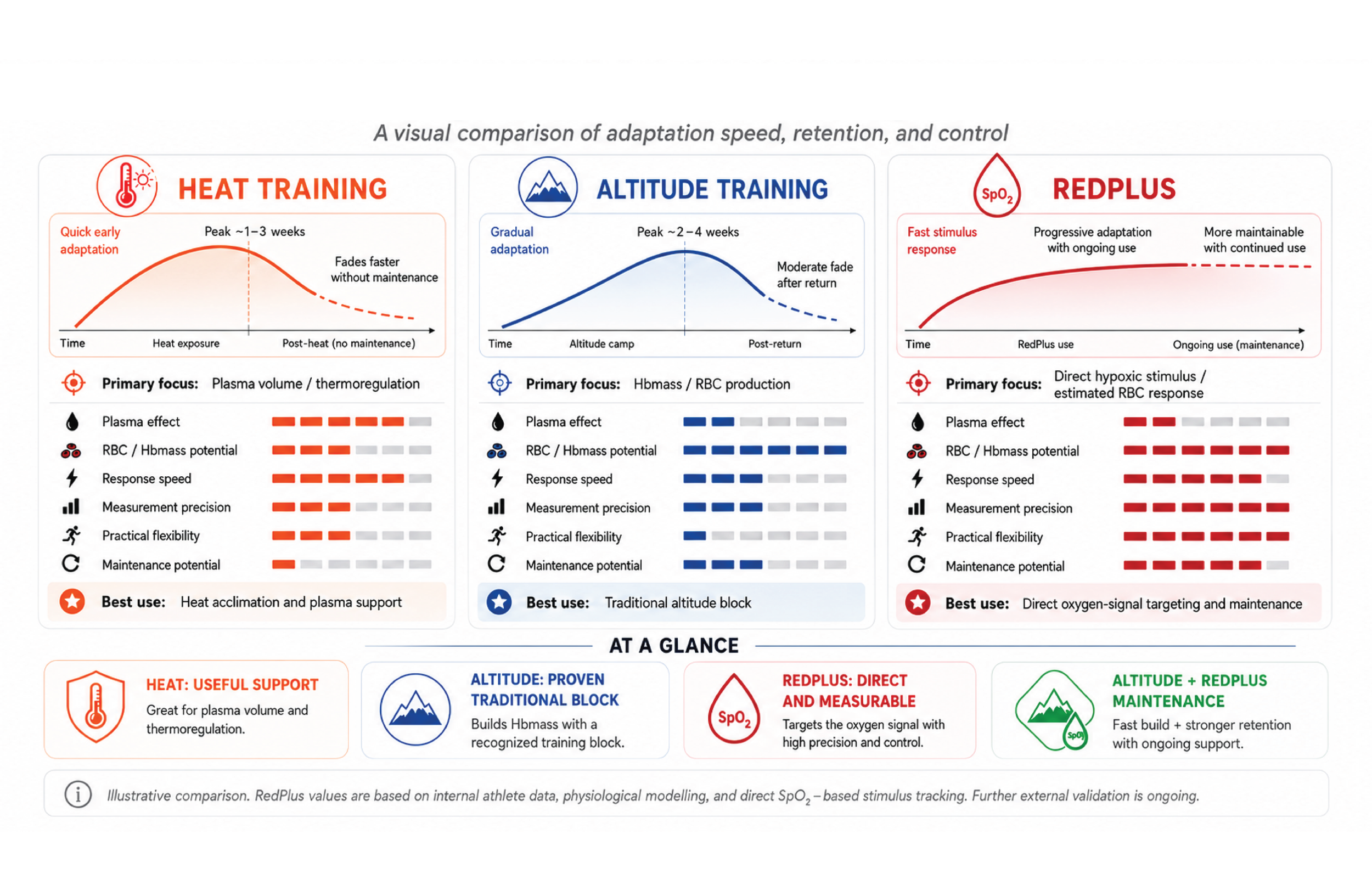
RedPlus is not designed around endless linear growth. The goal is to build, peak, and then maintain as much of the achieved adaptation as possible.
This 21-week model uses a conservative turnover assumption: red blood cells can circulate for around 90–120 days, and the model assumes the earliest effects begin to fade after approximately 90 days.
That matters because RedPlus is aimed at supporting red-cell-related stimulus, not just short-term blood-volume changes. Traditional altitude training can create powerful adaptations, but some of the early performance effect may be influenced by plasma and blood-volume shifts, which can change faster after return to sea level. RedPlus maintenance is designed to keep adding a lower weekly stimulus so more of the achieved adaptation can be preserved through the season.
In the chart, the weekly target is shown inside each bar. After the build and peak phase, the athlete continues with a relatively low 0.4% weekly maintenance target. This helps hold the active estimated stimulus high for several weeks. When the stronger peak weeks begin to expire, the curve starts to decline — but more slowly than it would without continued maintenance.
A higher maintenance target could theoretically preserve more for longer, but it would also require more weekly workload. That is why the practical goal is not to peak every week. The goal is to build at the right time, peak before important periods, and maintain with the lowest effective workload.
Key point:
Maintenance does not keep pushing the level higher forever. It helps slow the decline and preserve more of what has already been built.
Note:
This is an illustrative model. Active estimated stimulus is model-based and should not be interpreted as directly measured HCT.
Source: de Bruijn R, Richardson M, Schagatay E. Increased erythropoietin concentration after repeated apneas in humans. Eur J Appl Physiol. 2008;102:609–613. Reported EPO increase peaked about 3 hours after the final apnea and returned to baseline about 2 hours late