
Breath-holding is part of natural human behaviour
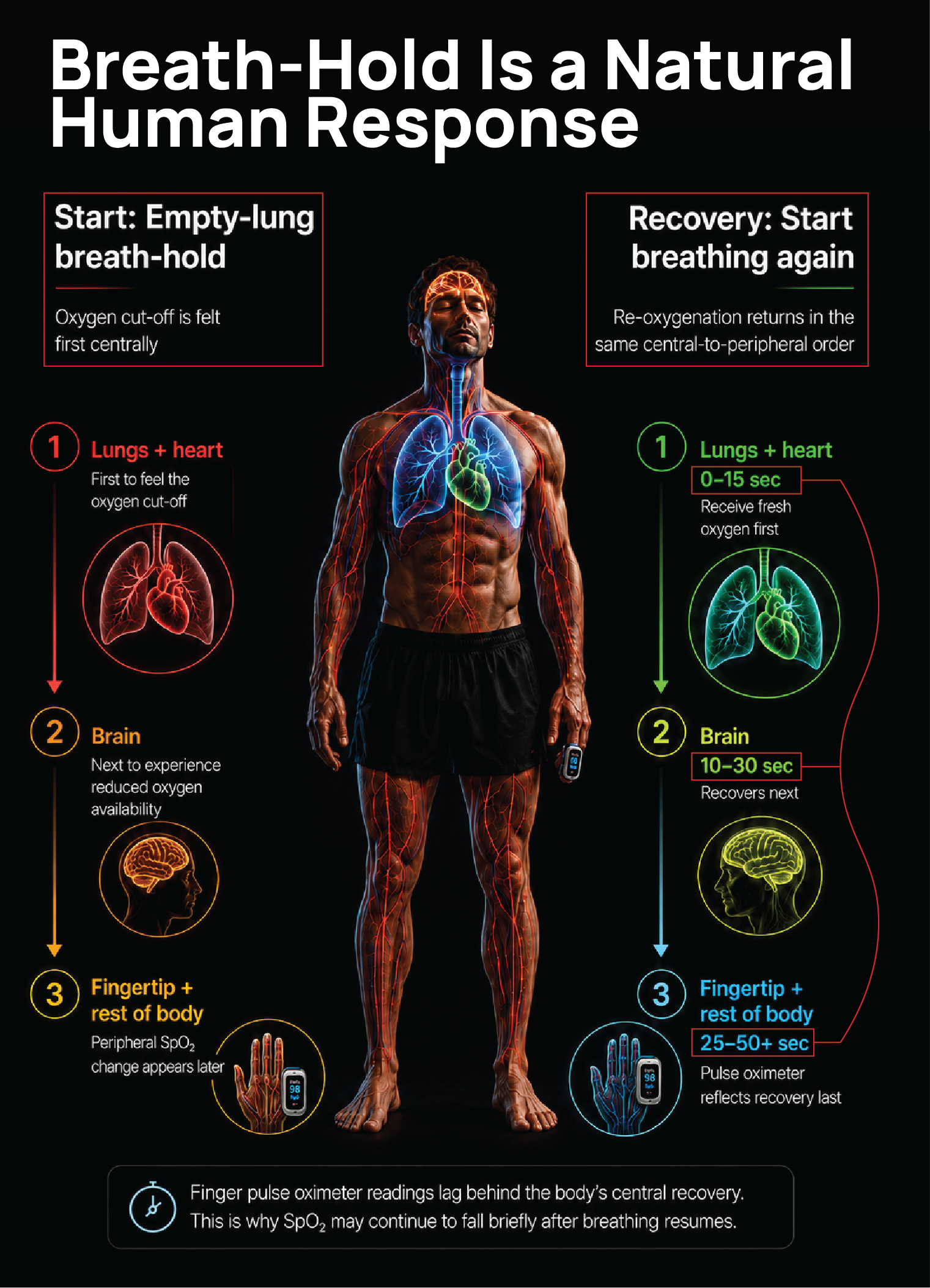
Breath-holding is already part of natural human behaviour. Humans have used it for thousands of years when diving, staying underwater, and hunting for food. The breath-hold itself is not dangerous when performed correctly. The danger starts when users ignore the body’s signals, push too far, or chase lower SpO₂ values instead of following the RedPlus SpO₂ instructions.
The urge to breathe can feel intense, but it is not dangerous by itself. It is the body’s normal breathing drive. The danger starts when users push too far or chase lower SpO₂ numbers.
SpO₂ may keep falling briefly after breathing resumes because the fingertip reading is delayed. Stay in the safety zone: lie down, recover fully, and follow the RedPlus SpO₂ instructions.
Safety note — deep SpO₂ responses
RedPlus measures arterial oxygen saturation through SpO₂, using a pulse oximeter placed on the finger. During controlled empty-lung breath-holds, SpO₂ can fall deeply, especially in trained athletes.
Low SpO₂ values should be taken seriously, but they should also be understood correctly. A finger pulse oximeter does not measure oxygen changes directly inside the lungs. It measures oxygen saturation in the arterial blood reaching the fingertip. This means there can be a short delay between what is happening centrally in the body and what appears on the pulse oximeter display. Pulse oximeter readings can lag because blood must travel from the heart to the peripheral sensor, and the device also uses signal averaging to stabilize the displayed value.
This is why SpO₂ may continue to fall briefly after the breath-hold has ended and normal breathing has resumed. In many cases, this does not mean the user is still getting worse. It often reflects the delayed arrival of the lowest oxygen-saturation blood at the finger sensor. However, this delay is exactly why users should stop early, recover fully, and never chase the lowest possible number.
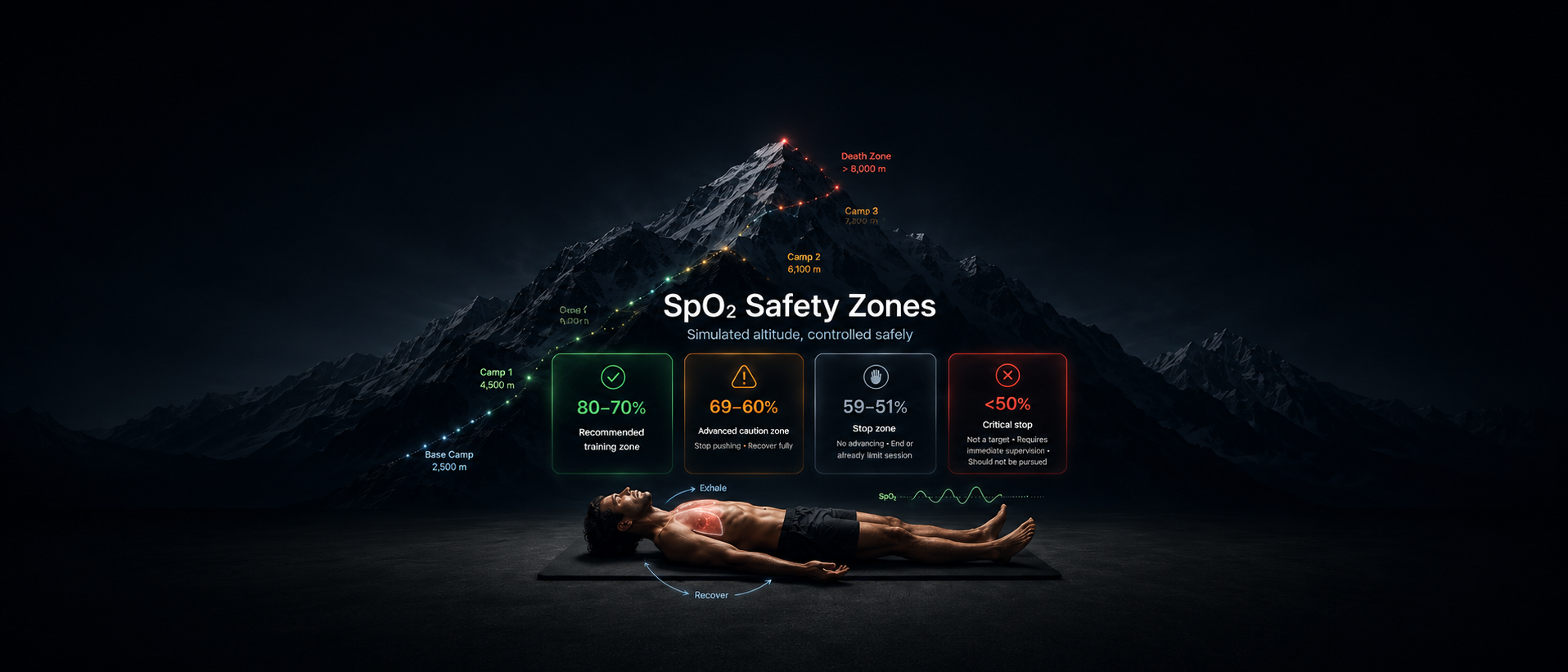
RedPlus uses four SpO₂ training zones and a fifth safety Stop
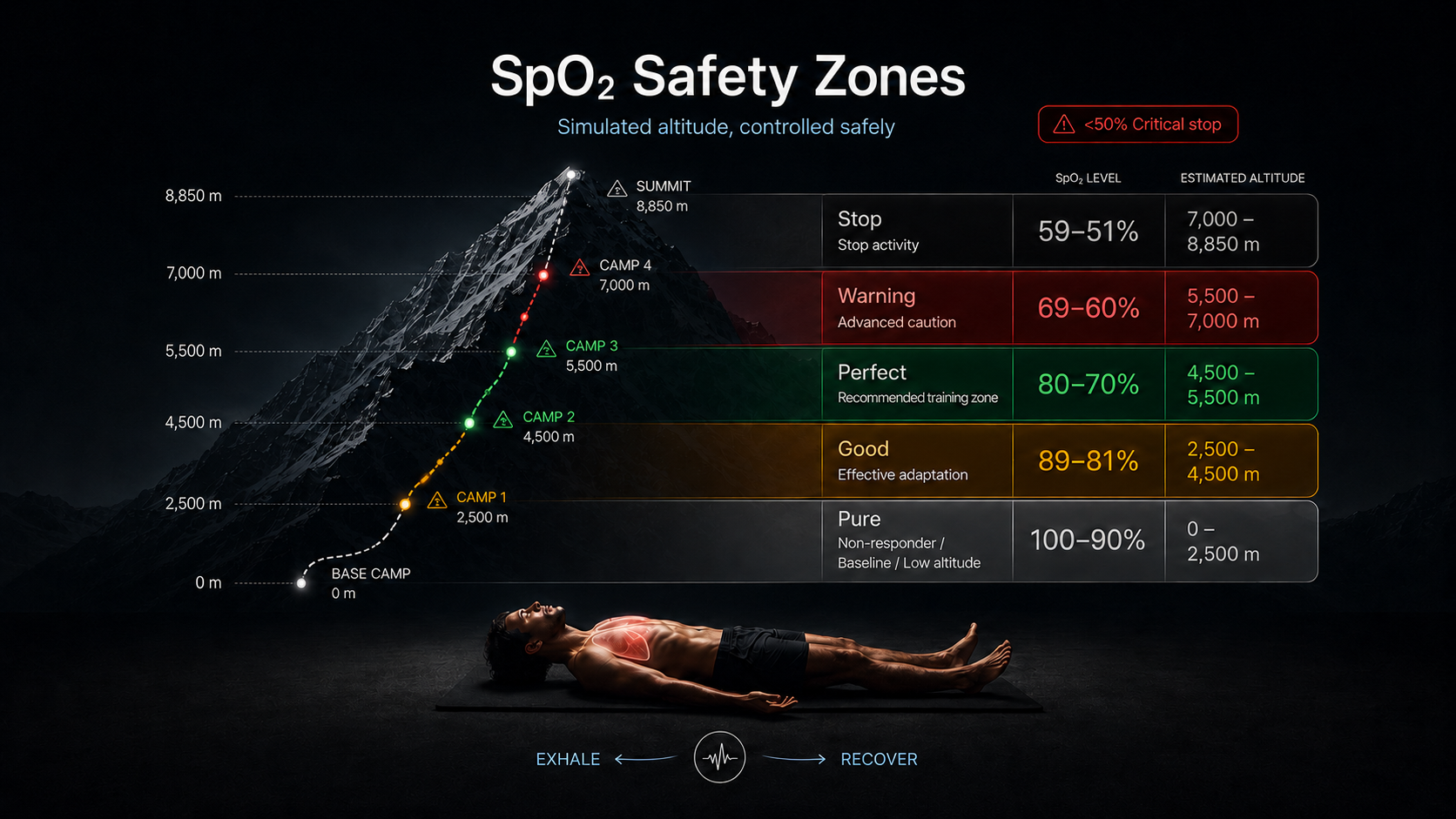
RedPlus uses four SpO₂ training zones and a fifth safety Stop Zone. Values below 50% fall outside the five-zone system and represent a potential risk area that is not supported by RedPlus. The safety boundary is already crossed within the 59–51% Stop Zone, and values below 50% should never be pursued.
Recommended SpO₂ Zones
100–90%: Grey Zone = Pure Zone / Non-Responder Baseline / Low Altitude
This range represents little or no meaningful hypoxic training stimulus. It typically reflects baseline oxygen saturation or a limited response to the breath-hold and is therefore not considered a target training zone.
89–81%: Yellow Zone = Good Zone / Effective adaptation
This range represents a meaningful hypoxic stimulus and can support adaptation. It is a good working zone, although the hypoxic stimulus is less pronounced than in the recommended 80–70% training zone.
80–70%: Green Zone = Perfect Zone / Recommended training zone
This is the preferred working range for RedPlus hypoxic sessions. It provides a meaningful hypoxic stimulus while keeping the session controlled and repeatable.
69–60%: Red Zone = Warning Zone / Advanced caution
This range should be treated with caution. Users should stop pushing, breathe normally, and recover fully before considering another repetition.
59–51%: Black Zone = Stop zone / Stop Activity
This is not a target range. Users should not chase these values. The session should end or be strongly limited.
Below 50%: Critical stop
This is not a training goal. It should not be pursued. Values below 50% require strict caution and should not be part of normal RedPlus use.
Why SpO₂ Can Drop After You Start Breathing Again
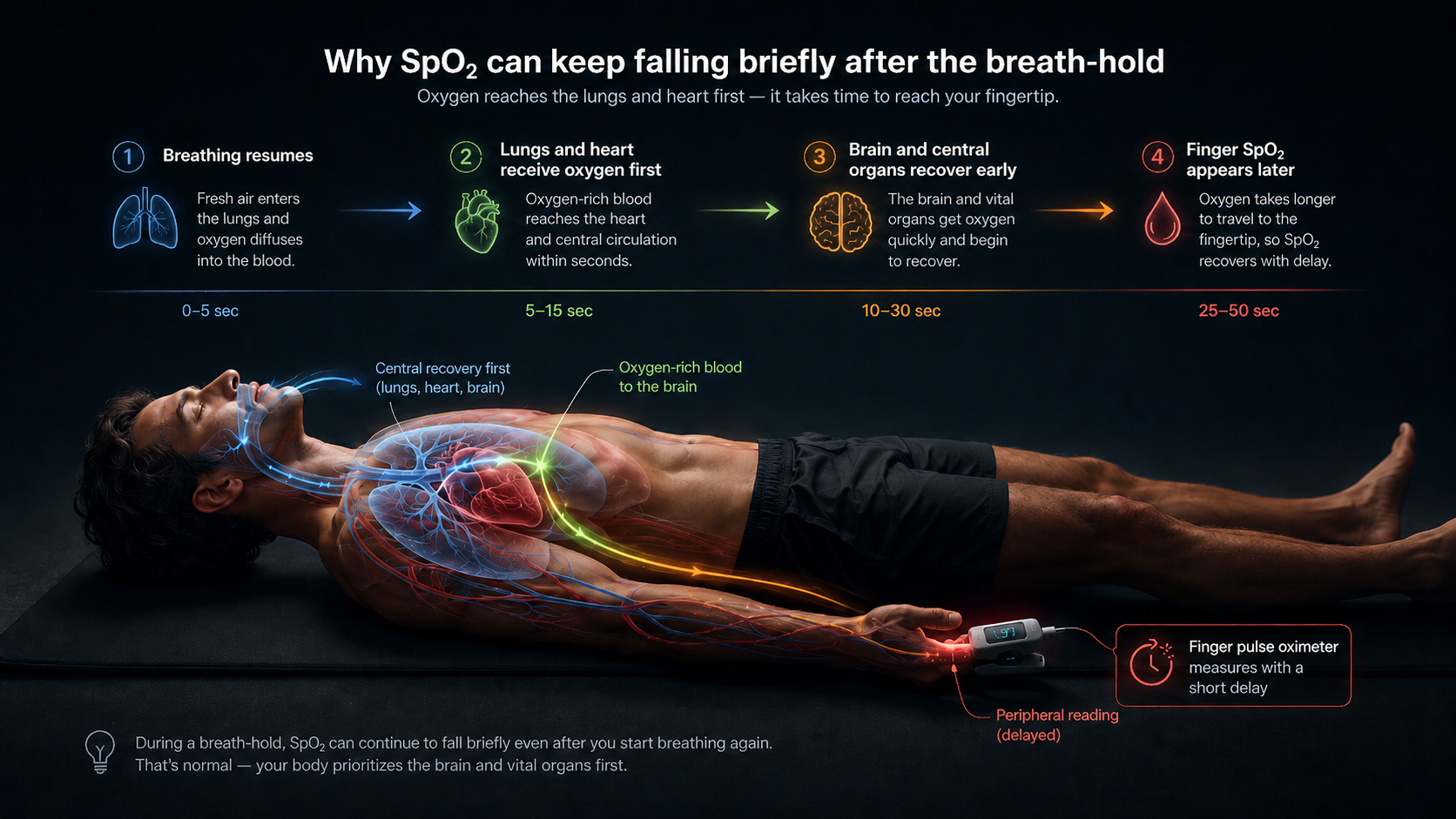
During an empty-lung breath-hold, oxygen saturation may continue to decline internally while the user is still holding the breath. When breathing resumes, oxygen enters the lungs first, and the body begins to reoxygenate. But the finger pulse oximeter may not show this improvement immediately.
There are three important reasons:
The sensor is placed on the finger
The fingertip is a peripheral measurement site. It takes time before the blood reaching the finger reflects the latest central oxygen changes.The pulse oximeter smooths the signal
Many devices average the signal over several seconds to avoid unstable readings. This improves readability, but it also means the displayed number may lag behind the actual physiological change.The lowest SpO₂ often appears during recovery
In empty-lung breath-holds, the deepest visible SpO₂ dip often appears after the breath-hold has ended. This can look alarming if the user does not understand the delay.
This delay should not create panic, but it must create discipline. The correct reaction is not to chase deeper numbers. The correct reaction is to breathe normally, stay still, and allow SpO₂ to return toward baseline.
Is the SpO₂ Delay Dangerous?
The SpO₂ delay is not dangerous in itself. It is a normal limitation of finger-based pulse oximetry, where the displayed value may lag behind the body’s central oxygen response.
This is why SpO₂ can continue to fall briefly after breathing has resumed. In most controlled RedPlus sessions, this reflects delayed measurement at the finger rather than ongoing deterioration.
The safety risk is strongly reduced when users follow the RedPlus instructions: perform sessions lying down or seated, recover fully, and stay within the recommended SpO₂ zones.
The real risk comes from chasing lower numbers, pushing beyond the recommended zones, or performing breath-holds while standing, exercising, swimming, driving, or operating equipment.
RedPlus is not about reaching the lowest SpO₂. It is about creating a controlled, repeatable hypoxic stimulus.
Position and Environment
RedPlus sessions should only be performed:
lying down, or
seated in a safe position
RedPlus sessions should never be performed while:
standing
cycling
running
swimming
driving
operating equipment
doing any activity where dizziness or loss of coordination could create danger
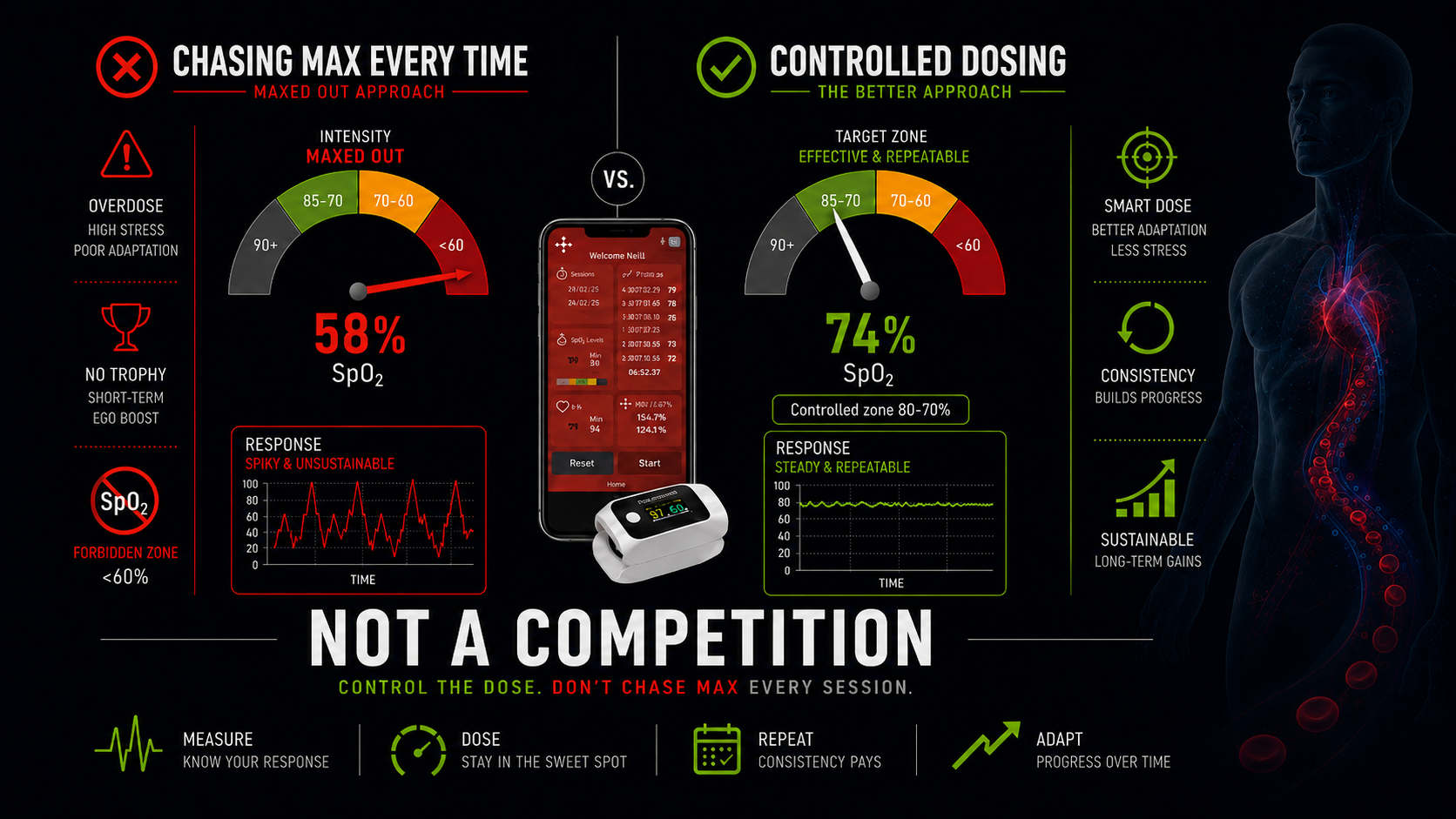
Do Not Turn Low SpO₂ Into a Competition
Some experienced users may occasionally reach values below 70%, and rare highly trained users may go lower. However, low SpO₂ should never be treated as a competition or a personal record attempt.
The goal is not to reach the lowest possible number.
The goal is to create a controlled, repeatable, measurable hypoxic stimulus.
Users should avoid extreme breath-hold strain, excessive pushing, or forcing the breath-hold far beyond the natural urge to breathe. Holding a few extra seconds after the first clear urge to breathe may be manageable for experienced users, but this should remain controlled and never become aggressive.
Warning Symptoms
Deep hypoxia can cause:
light-headedness
warmth or tingling
unusual relaxation or euphoria
confusion
loss of coordination
blurred awareness
fainting or blackout in extreme cases
Breath-hold-related blackout is a known hypoxic risk in apnea contexts, especially when oxygen levels fall too far.
Who Should Seek Medical Advice First
Users with heart, lung, cardiovascular, neurological, fainting-related, or other relevant medical conditions should seek medical advice before using RedPlus.
This is especially important for users with a history of:
fainting
arrhythmia
unexplained dizziness
respiratory disease
cardiovascular disease
seizure-like episodes
abnormal oxygen saturation at rest
Practical Safety Rule
The safest approach is simple:
Stop the breath-hold before panic. Breathe normally. Stay still. Wait for the SpO₂ dip to appear and return toward baseline before starting the next repetition.
A low number is not the achievement.
A controlled, repeatable stimulus is the achievement.