
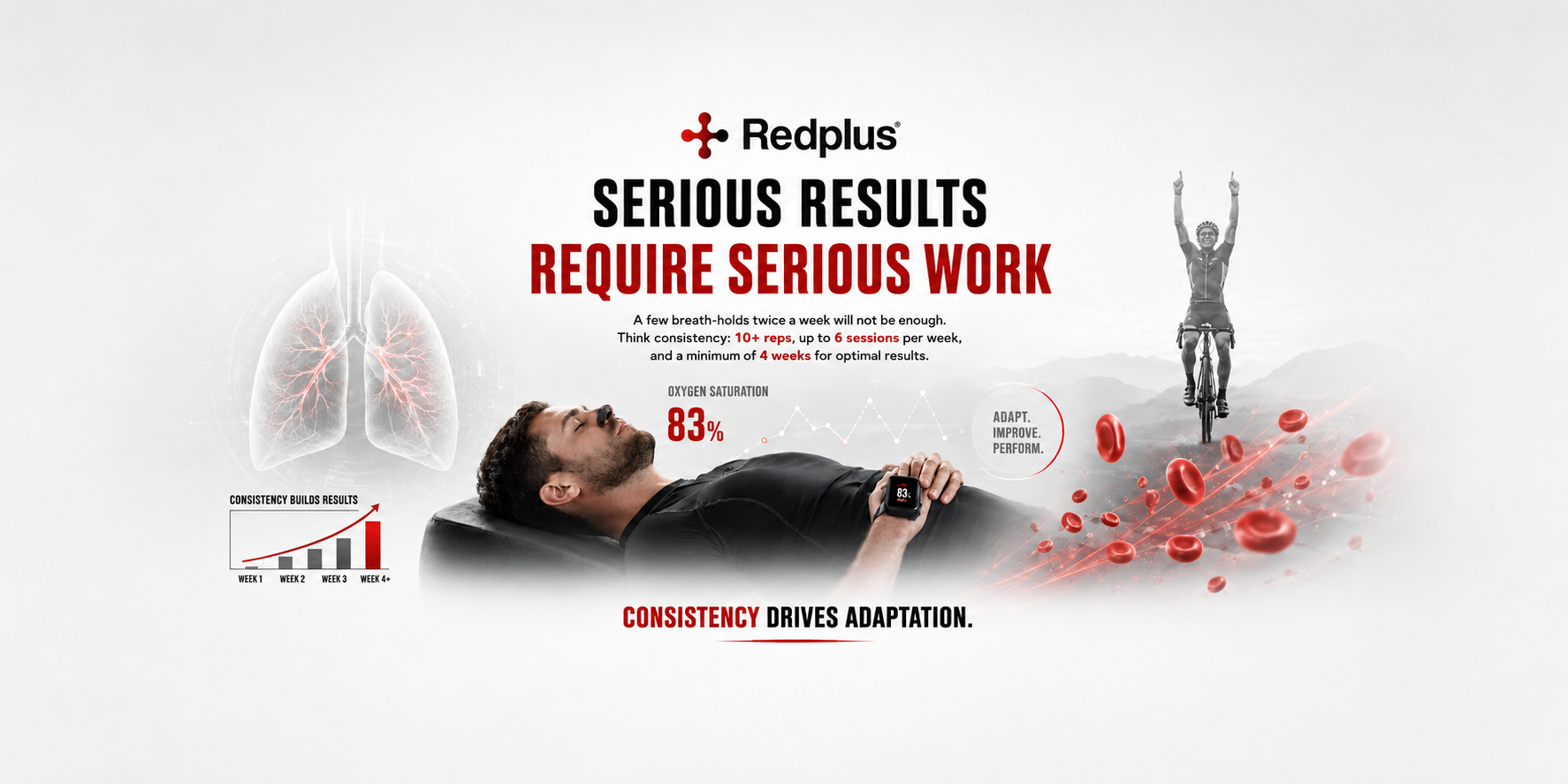
How Many Breath-Holds Does It Take?
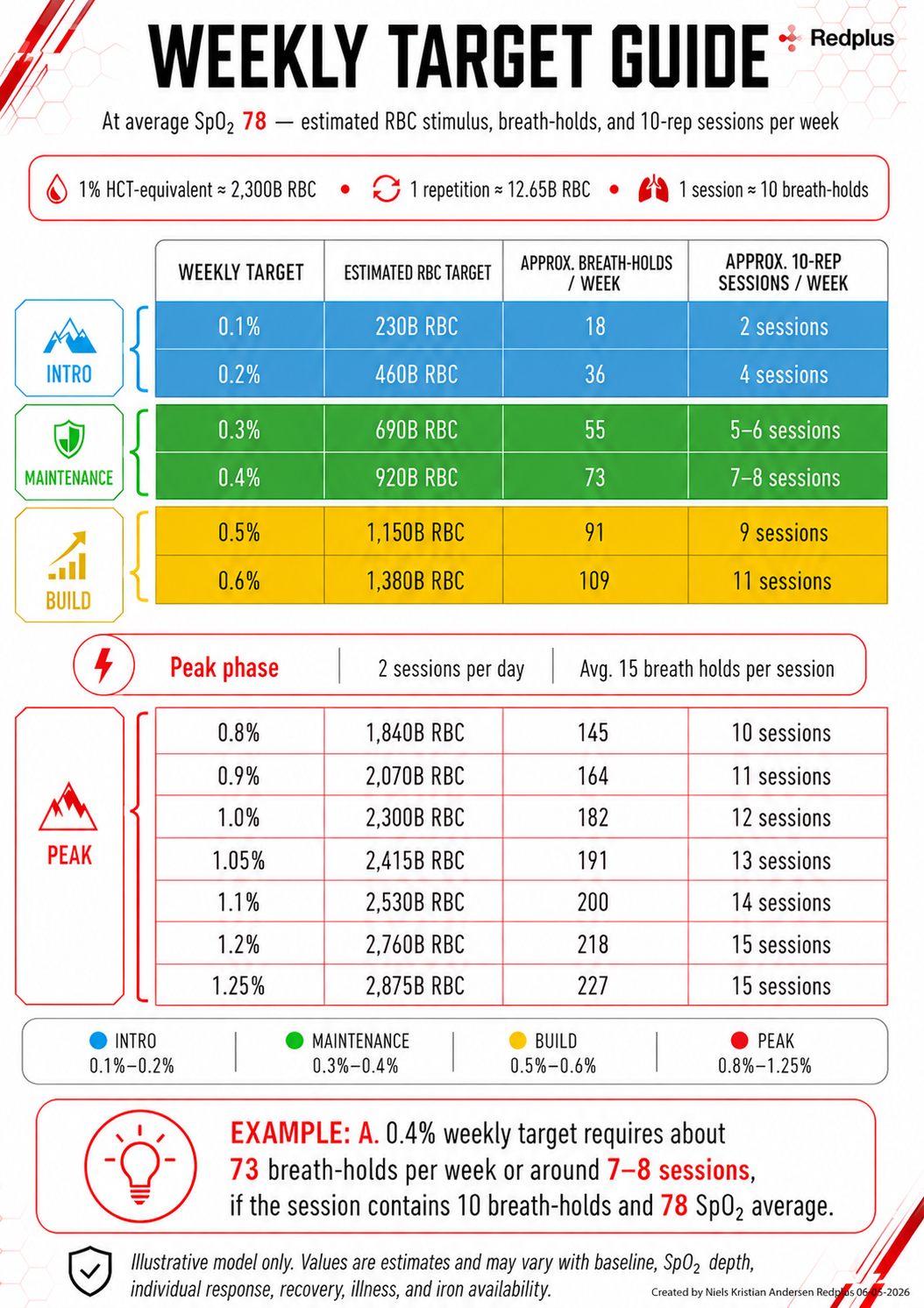
Your weekly target determines how much work is required.
The table below shows how many breath-holds are needed per week at an average SpO₂ of 78. The key column is “Approx. breath-holds/week”, which translates each weekly target into a practical workload.
For example, a 0.4% weekly target requires about 73 breath-holds per week, equal to around 7–8 sessions if one session contains about 10 breath-holds.
As the target increases, the weekly workload increases as well. Lower targets are suitable for introduction and maintenance, while higher targets require more structure.
In the peak phase, the model assumes up to 2 sessions per day and approximately 15 breath-holds per session, or around 30 breath-holds per day. These can be split across the day — for example 10 breath-holds in the morning and 20 in the evening, or two structured sessions.
The reason for splitting peak sessions is both practical and physiological. It reduces the stress of doing one very long session, while also extending the daily hypoxic stimulus window.
Repeated-apnea research has shown that EPO concentration can increase after serial breath-holds, peak around 2–3 hours after the final breath-hold, and return toward baseline roughly 4–5 hours later. This supports the logic of using two daily sessions during peak phases, instead of placing all breath-holds into one long block.
Key point:
The higher the weekly target, the more consistent the athlete must be. Build and maintenance can be done with lower weekly volume. Peak targets require more frequent sessions, higher repetition load, and better daily structure.
Note:
This is an illustrative model. Actual values may vary with baseline, SpO₂ depth, recovery, illness and iron availability.
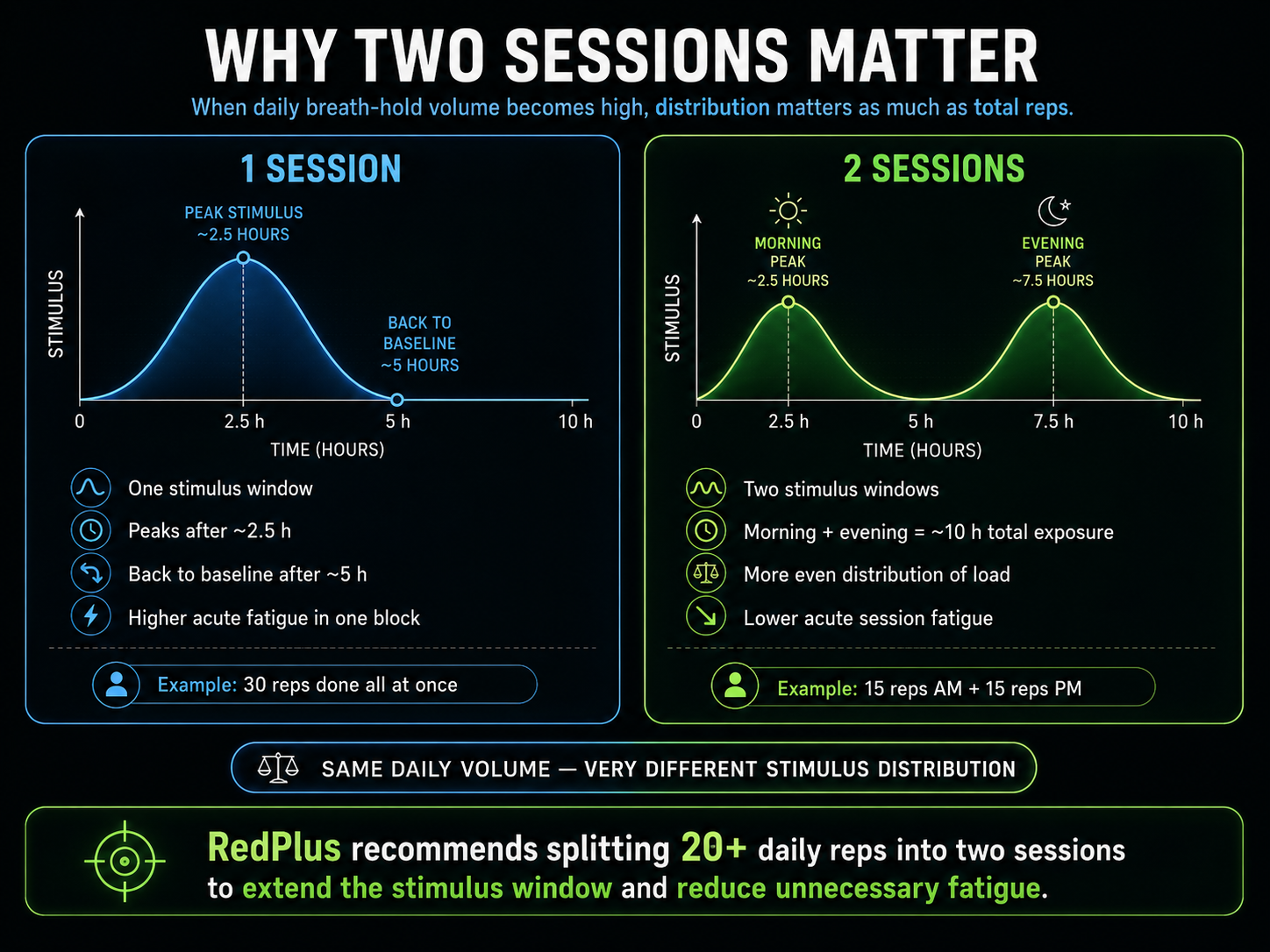
Source: de Bruijn, Richardson & Schagatay, European Journal of Applied Physiology 2008 — repeated apneas increased EPO concentration, with an average maximum rise of 24%.