Why earlier Hypoxia studies likely missed the effect
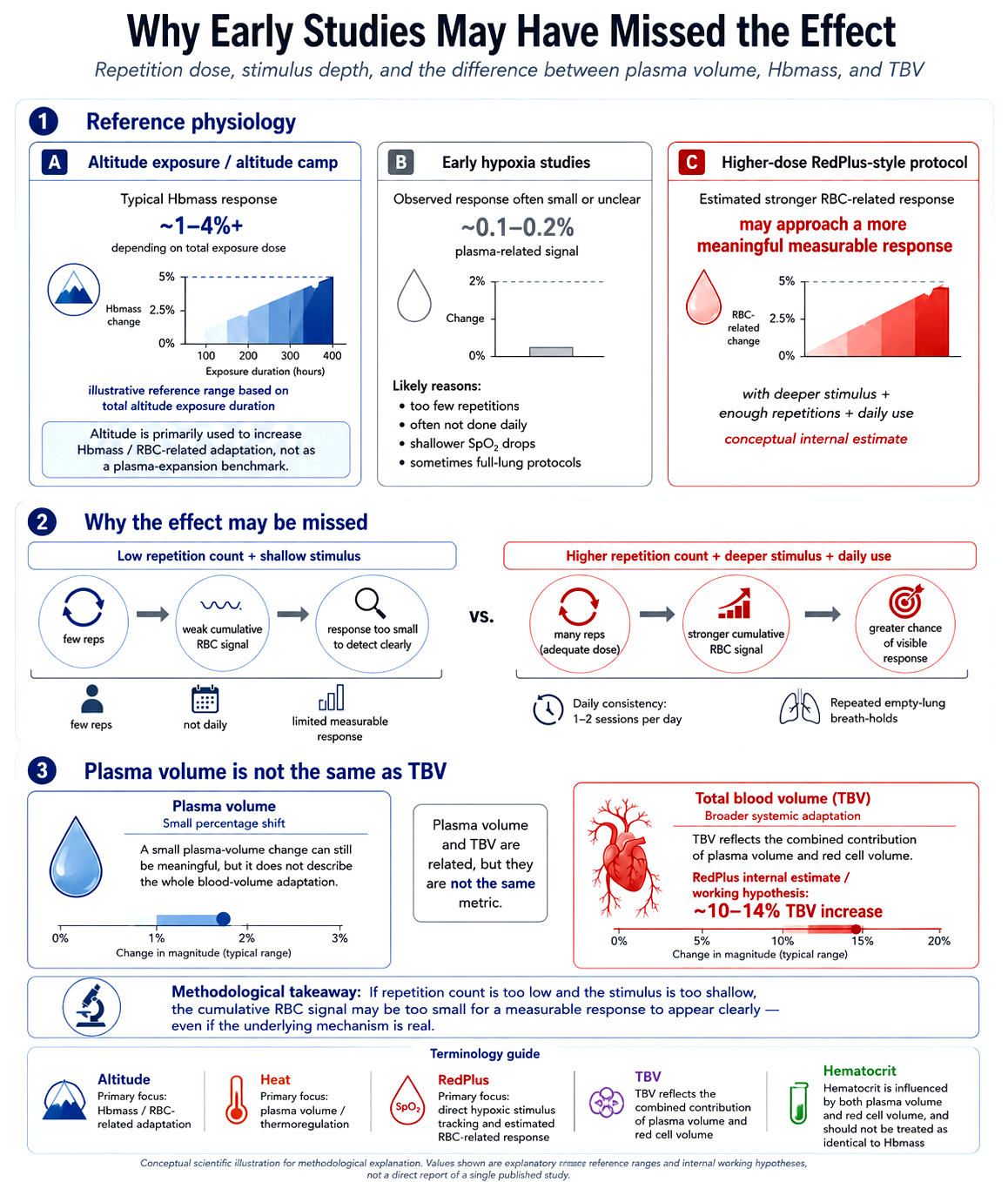
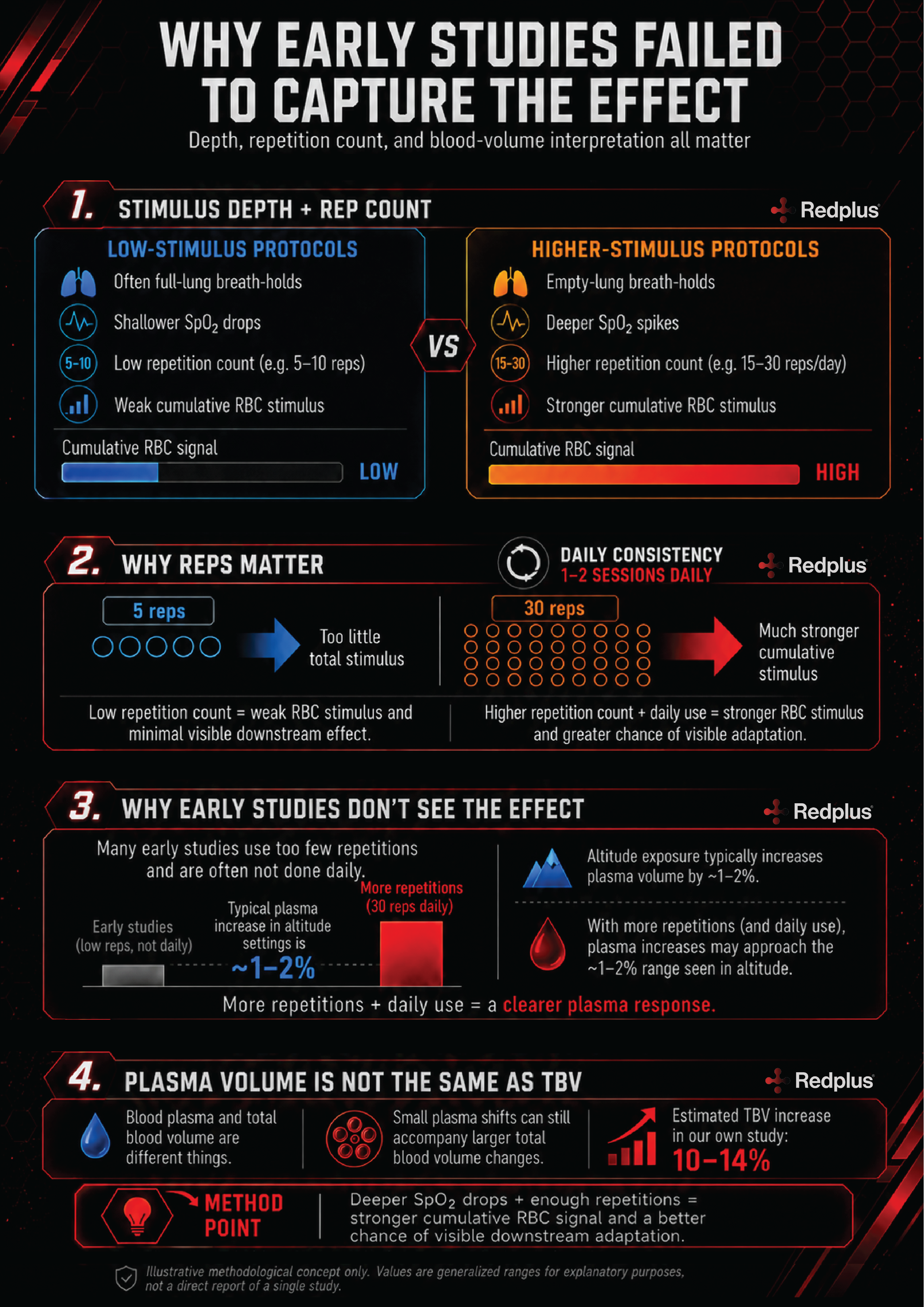
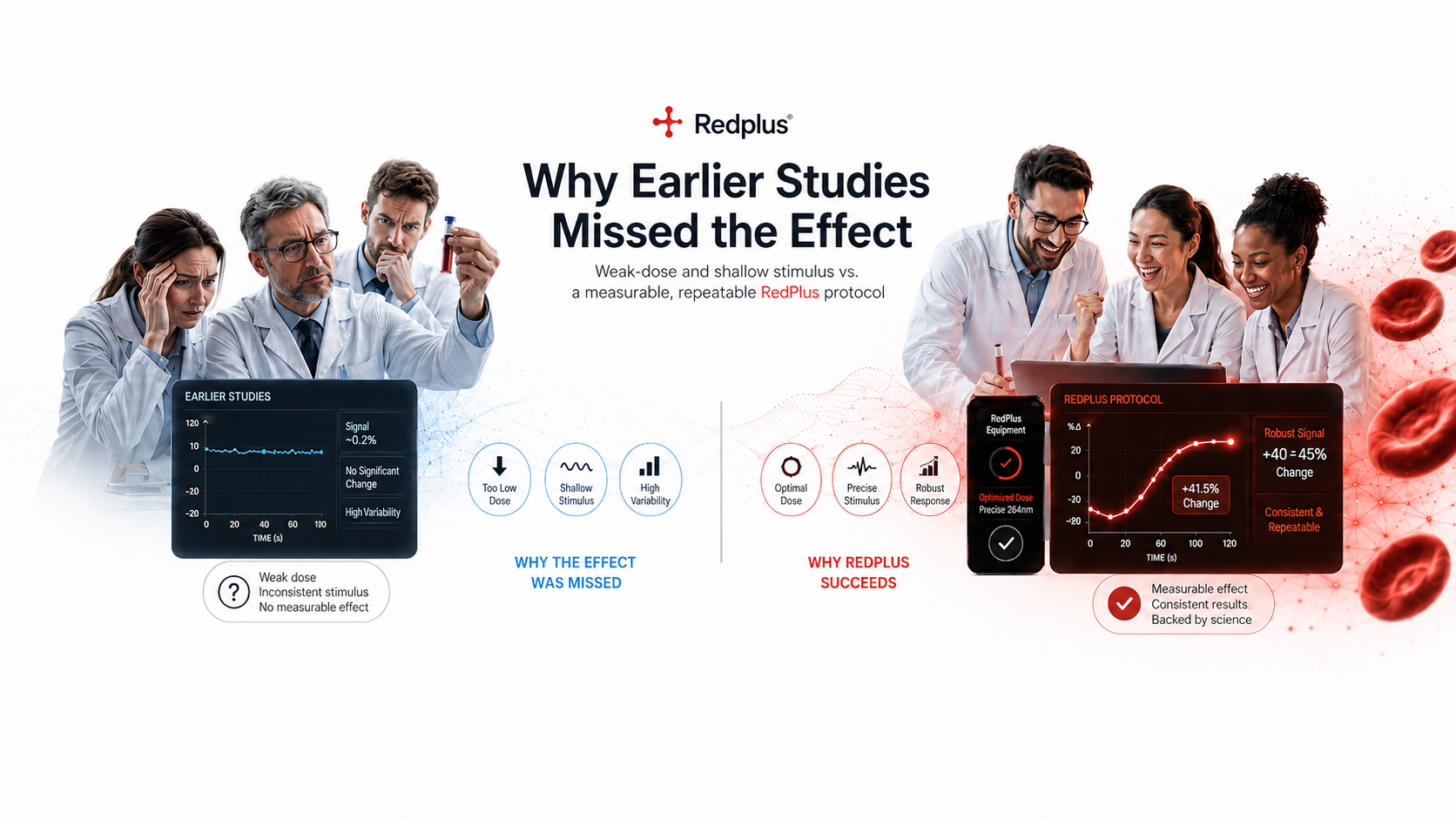
According to our internal study work, founder-case analysis, and ongoing beta-user feedback, our current view is that earlier hypoxic breath-hold studies likely missed the effect because the applied dose was too weak.
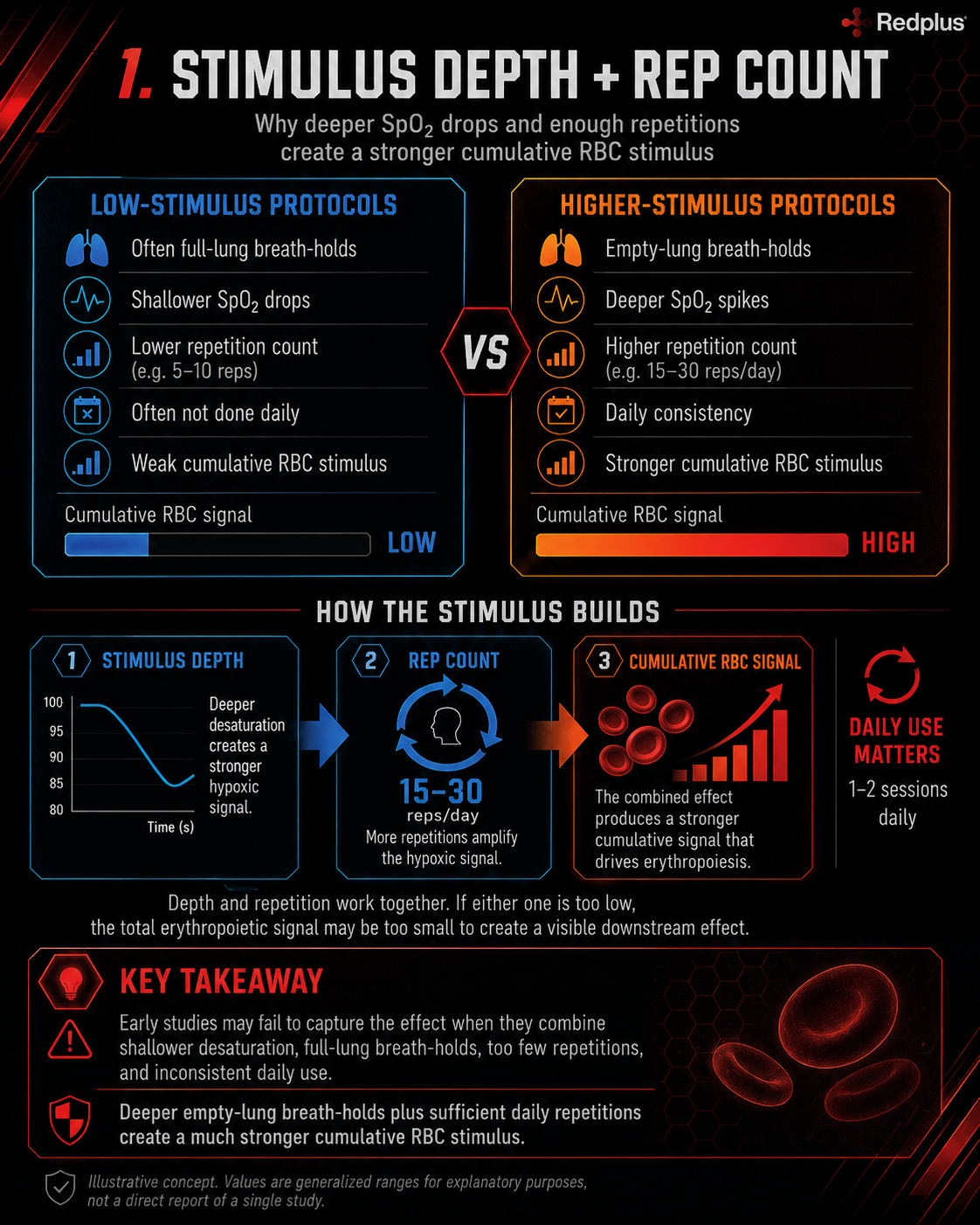
The core issue is methodological. If repetition count is too low, sessions are not performed consistently day after day, and the SpO₂ drops are too shallow, the cumulative erythropoietic signal remains small. Under those conditions, the downstream response will also appear small, unclear, or absent — not necessarily because the mechanism is irrelevant, but because the protocol did not push the system far enough.
That is also why it is essential to keep the physiological terms separate. Altitude training is classically associated with Hbmass / red-cell-related adaptation, whereas heat training is more strongly associated with plasma-volume expansion and thermoregulatory adaptation. Total blood volume (TBV) reflects the combined contribution of plasma volume and red cell volume, and hematocrit should not be treated as identical to Hbmass. (British Journal of Sports Medicine)
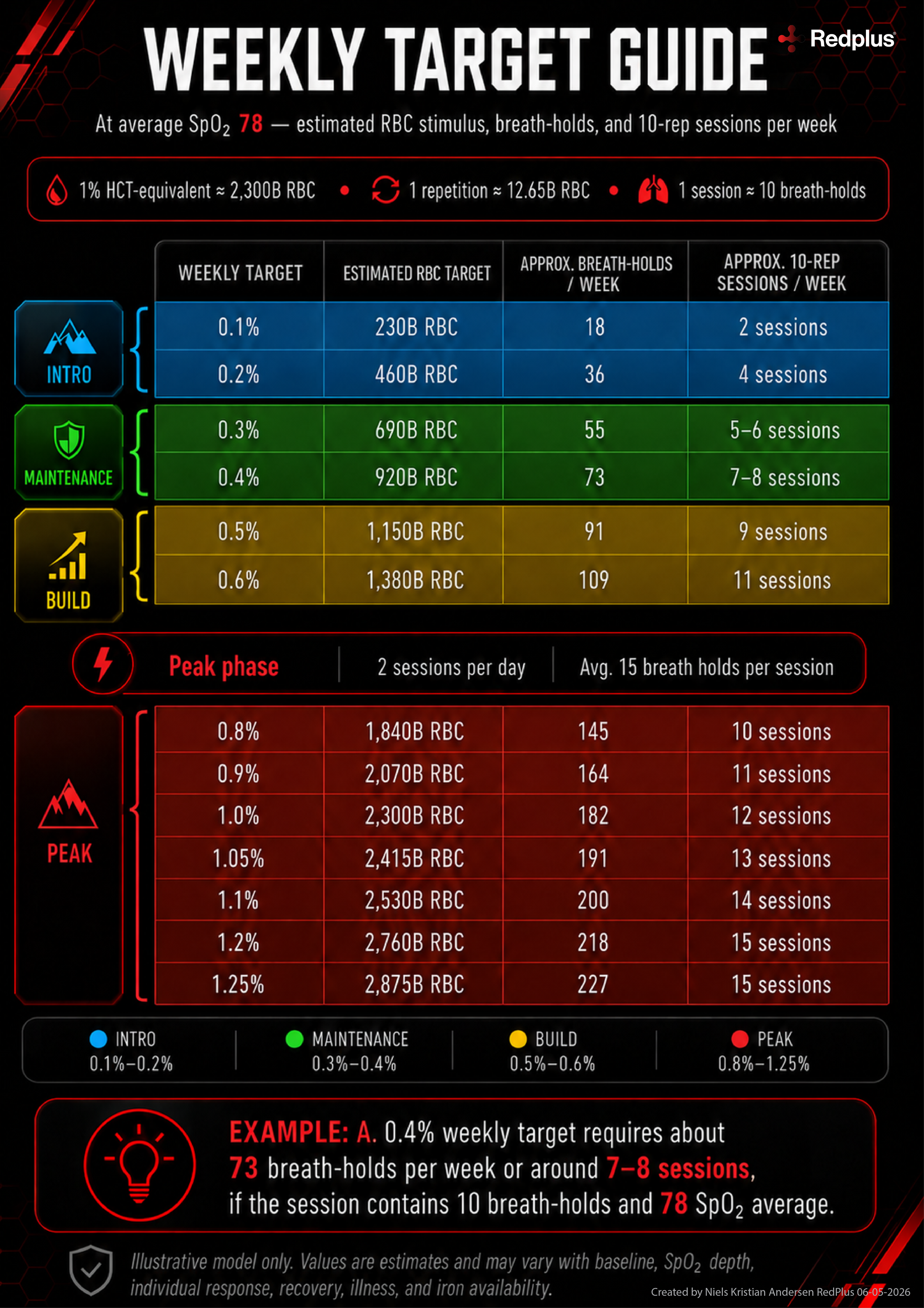
From our perspective, this is exactly where the RedPlus system becomes highly relevant as a research and monitoring tool. Because the app allows live tracking of users, daily session frequency, repetition count, SpO₂ depth, and repetition-by-repetition behaviour, it creates a level of protocol visibility that many earlier study designs did not have. That makes it possible to examine not only whether a response occurs, but whether the applied dose was actually sufficient in the first place.
Our interpretation is therefore straightforward: earlier studies likely missed the effect because they often combined too few repetitions, too little daily consistency, and insufficient stimulus depth. RedPlus is designed to address those exact weaknesses by making the hypoxic dose trackable, repeatable, and controllable.
The methodological takeaway is clear: if repetition count is too low, SpO₂ stays too high, and use is not consistent, the response will be underestimated.
How to read the physiology terms
Altitude
Primary focus: Hbmass / RBC-related adaptation
Heat
Primary focus: plasma volume / thermoregulation
RedPlus
Primary focus: direct hypoxic stimulus tracking and estimated RBC-related response
TBV
TBV reflects the combined contribution of plasma volume and red cell volume
Hematocrit
Hematocrit is influenced by both plasma volume and red cell volume, and should not be treated as identical to Hbmass