

Pro Athlete Observation
Confidential Professional Rider & Elite Athlete Observations
Updated: 18-05-2026
RedPlus is currently being tested and followed by elite-level and professional endurance athletes, including riders connected to the highest level of the sport. Because several of these athletes are still active and connected to professional teams, their names cannot be disclosed at this stage.
During the ongoing beta and validation process, we have observed clear individual differences in how elite athletes respond to empty-lung breath-hold hypoxia. In controlled testing, several highly trained athletes have been able to reduce SpO₂ below 70%, and in some cases below 60%, without reporting major discomfort. In a few isolated controlled test observations, values below 50% have also been recorded.
RedPlus does not encourage or support pushing SpO₂ to extreme levels. These observations are used to better understand individual hypoxic tolerance, safety boundaries and physiological response patterns in elite athletes.
Interestingly, high performance level does not necessarily translate into longer breath-hold duration. In many cases, elite and professional athletes perform empty-lung breath-holds within a similar time range as trained recreational athletes and non-elite users — typically between approximately 45 seconds and 1:30. Some athletes can hold significantly longer, but this is not necessarily repeated across every breath-hold.
This suggests that the SpO₂ response, rather than breath-hold duration alone, may be one of the more relevant markers when evaluating the actual hypoxic stimulus.
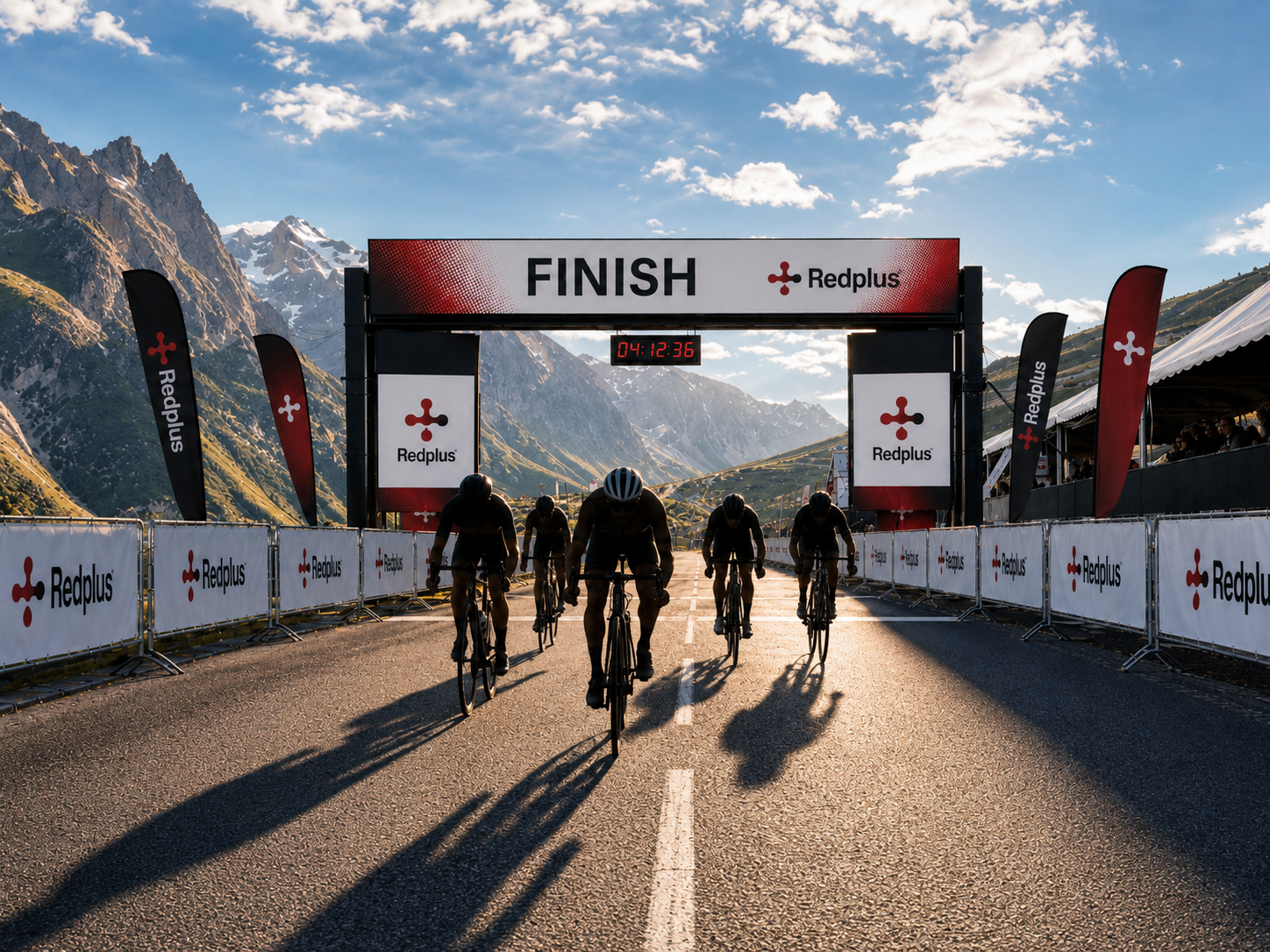
One confidential professional rider used RedPlus as part of his preparation for the 2026 season, including the build-up to important races during the spring classics period. During this period, he delivered several strong performances that were clearly above his previous seasonal level. The progression culminated in a remarkable race victory.
This result has already been publicly referenced in independent media coverage, but the rider’s identity and the specific race are not disclosed here. The observation is not presented as proof that RedPlus caused the performance improvement. However, the timing, the athlete feedback and the performance progression make it a relevant real-world case within the ongoing RedPlus validation process.
We have also had correspondence with coaches who support the continued validation of the RedPlus protocol and believe the method may influence more than one performance-related parameter. One coach expressed the view that the effect is credible, while also noting that in elite sport there is not always time to wait years for deep scientific proof before testing a promising method in practice.
Another coach with experience in hypoxic training has confirmed several of our working assumptions and observations related to performance gains, recovery response and individual hypoxic tolerance.
In another confidential professional case, the athlete reported a clear recovery benefit and an immediate performance-related improvement, including indications of improved aerobic capacity. While these reports remain observational, they strengthen the pattern seen across multiple independent athlete cases: RedPlus may support recovery perception, hypoxic tolerance, readiness feedback and performance development in high-level endurance athletes.
These observations are not presented as controlled clinical evidence. They are confidential real-world athlete observations gathered during the ongoing RedPlus beta and validation process. Further structured testing and external validation are ongoing.