
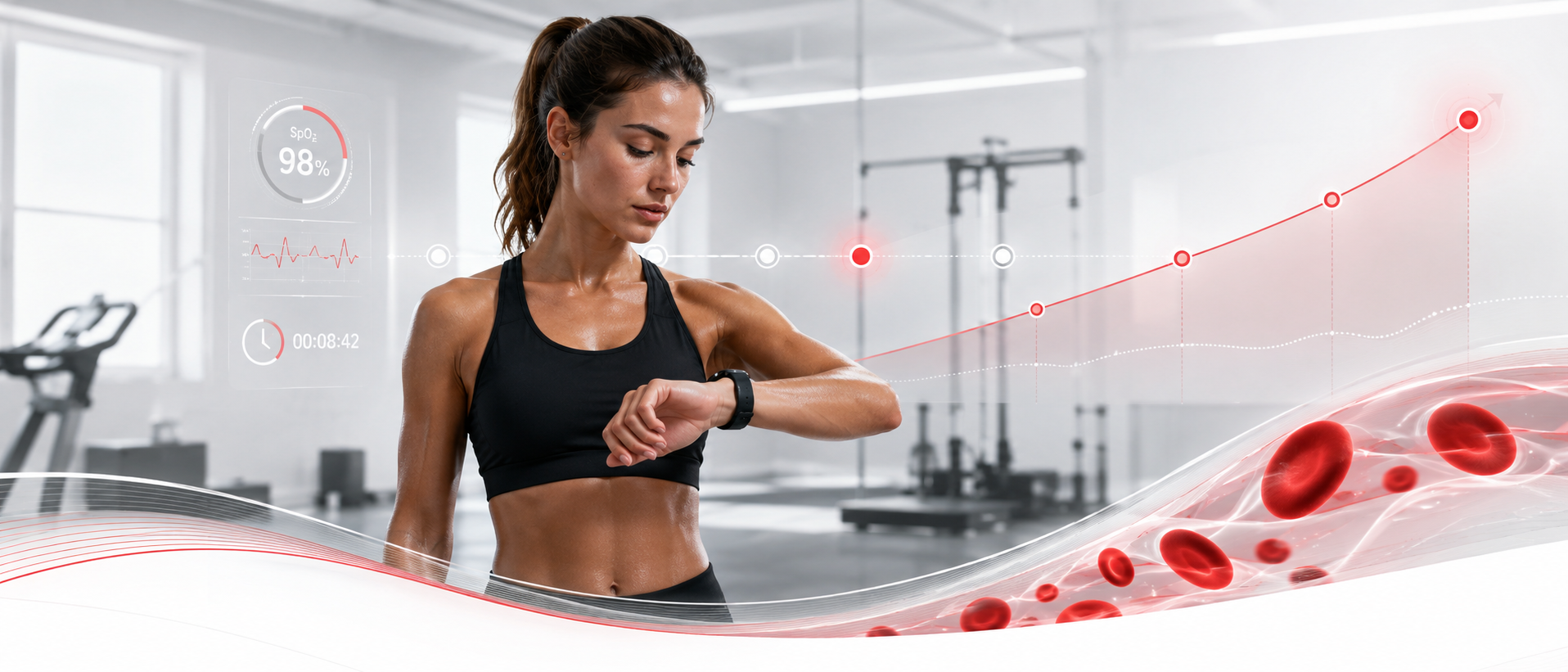
WHEN TO EXPECT BENEFITS
The physiological response to RedPlus starts from the first hypoxic session.
A single session creates the signal. Repeated sessions strengthen and accumulate that signal. Over time, the response develops from immediate oxygen-sensing reactions into longer-term adaptations related to red blood cell production and oxygen transport.
The process does not suddenly begin after several weeks. It starts quickly and develops over time.
1. Rapid Response — Minutes to Hours
The body responds immediately when oxygen availability falls.
During a RedPlus session, the drop in SpO₂ activates the body's oxygen-sensing systems and creates a strong hypoxic signal. This includes activation of pathways involved in erythropoietic signalling, including EPO.
At the same time, acute physiological responses help the body manage the temporary reduction in oxygen availability.
The signal starts with the first session.
2. Intermediate Response — Days to 1–2 Weeks
After repeated sessions, the response begins to accumulate.
The signals created during each hypoxic exposure continue into downstream processes involved in red blood cell production, oxygen transport and adaptation to repeated hypoxia.
This means that the physiological response does not stop when the breath-hold session ends.
Repeated sessions reinforce the response, while recovery gives the body time to carry out the adaptation.
The response also continues during Declimatization
During a Peak period, RedPlus progressively increases the accumulated hypoxic stimulus.
When hypoxic training is then reduced or stopped during Declimatization, the stimulus itself is removed — but the physiological processes triggered during Peak continue.
This is why RedPlus places a 6–10 day Declimatization period before a target event.
Peak creates the stimulus.
Declimatization gives the accumulated response time to develop.
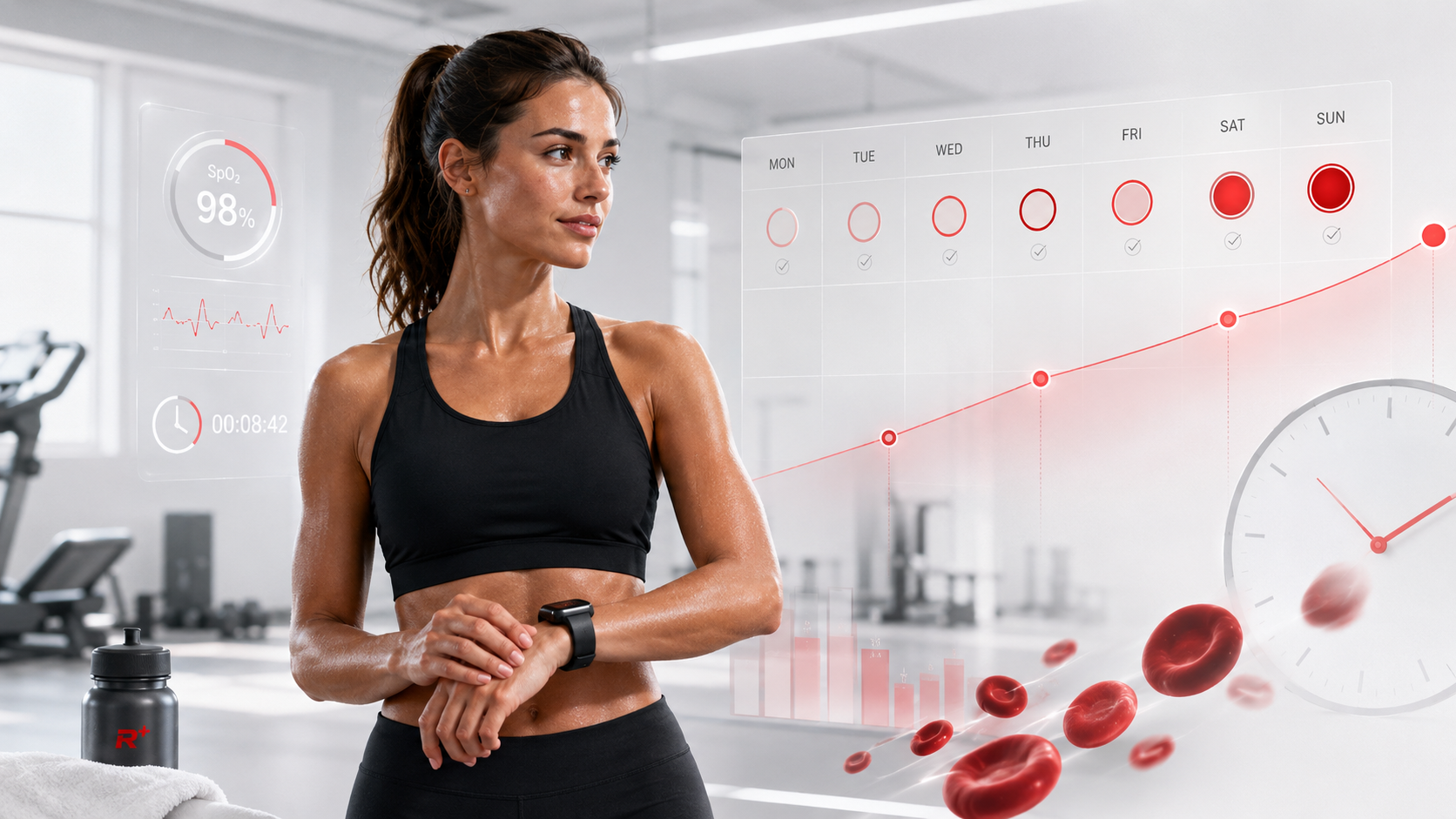
3. Long-Term Response — Weeks
Over several weeks, repeated hypoxic exposure creates a larger accumulated physiological response.
The repeated activation of oxygen-sensing and erythropoietic pathways drives adaptation related to:
red blood cell production
hemoglobin and oxygen transport
tolerance to repeated hypoxic exposure
overall oxygen-carrying capacity
The longer-term adaptation is therefore built from many short-term responses.
It is not a delayed process that suddenly begins after three or four weeks.
The response begins early. Repetition builds it. Recovery allows it to develop.
What You Should Expect
Do not think of RedPlus as a single-session effect.
Think of it as a progression:
Stimulus → Repeat → Accumulate → Recover → Adapt
The exact magnitude and timing of the response differs between athletes. Training history, total hypoxic dose, recovery, nutrition, iron availability and individual physiology all influence how strongly and how quickly the body responds.
For this reason, RedPlus tracks your training stimulus over time instead of assuming that every athlete follows exactly the same response curve.
The Key Principle
You do not wait several weeks for the body to start responding.
The response begins with the first hypoxic stimulus.
Repeated sessions strengthen the response, longer-term adaptation develops over time, and physiological activity continues into the recovery and Declimatization period.
That is why RedPlus combines Build, Peak and Declimatization rather than simply repeating the same hypoxic session indefinitely.