
How Your Blood Adapts
RedPlus uses repeated hypoxic exposure to stimulate the body's natural response to reduced oxygen availability.
Over time, repeated exposure may contribute to adaptations related to oxygen transport, including changes in red blood cell (RBC) production and hemoglobin mass.
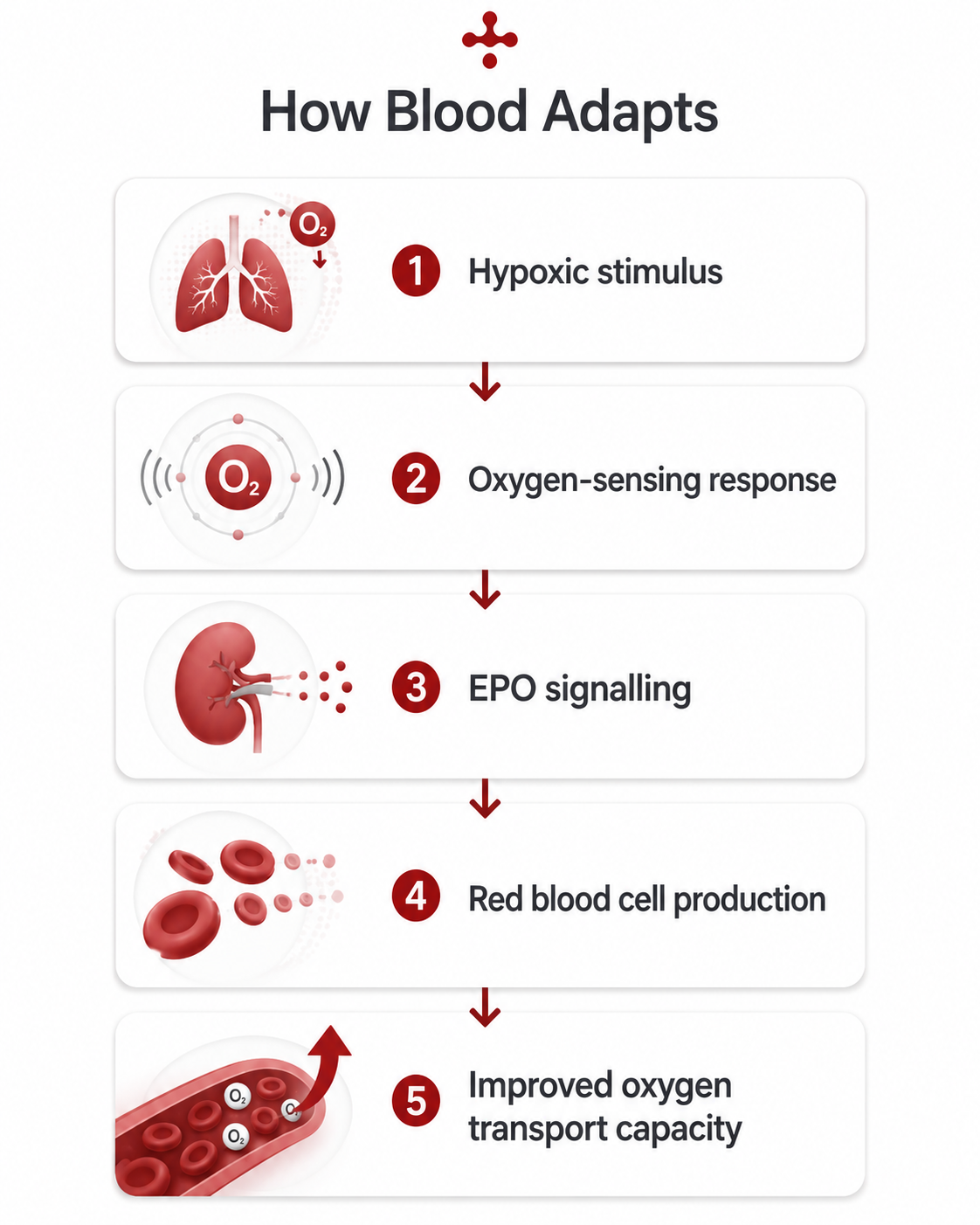
Each RedPlus session creates a short, controlled hypoxic stimulus. This activates the body's oxygen-sensing pathways and may trigger signalling associated with EPO and the production of new red blood cells.
1. Acute Response
With repeated hypoxic exposure over time — combined with sufficient recovery — the body may adapt by increasing red blood cell production and improving its capacity to transport oxygen.
A single hypoxic session creates the stimulus. Adaptation requires repeated exposure and recovery.
Long-Term Adaptation
RedPlus tracks your hypoxic exposure during each session, including your SpO₂ response, training zone, number of breath-holds and recovery between repetitions.
This allows you to monitor the dose and consistency of the hypoxic stimulus over time rather than training blindly.
2. What RedPlus Tracks
RedPlus may also display estimated changes in red blood cell production and hematocrit based on your accumulated training stimulus.
These values are estimates — not direct laboratory measurements of RBC mass, hemoglobin mass or hematocrit.
RBC & Hematocrit Estimates
3. Why hematocrit can change
Hematocrit is influenced by more than RBC production
Hematocrit can change because of:
red blood cell mass
plasma volume
hydration
recent exercise
altitude exposure
heat exposure
illness/recovery
A higher hematocrit does not automatically mean that red blood cell mass has increased.
4. Adaptation takes time
Adaptation is individual
The physiological response to hypoxic training varies between individuals. Training history, recovery, iron availability, nutrition, altitude exposure and the total hypoxic stimulus can all influence the response.
5. Stimulus + recovery
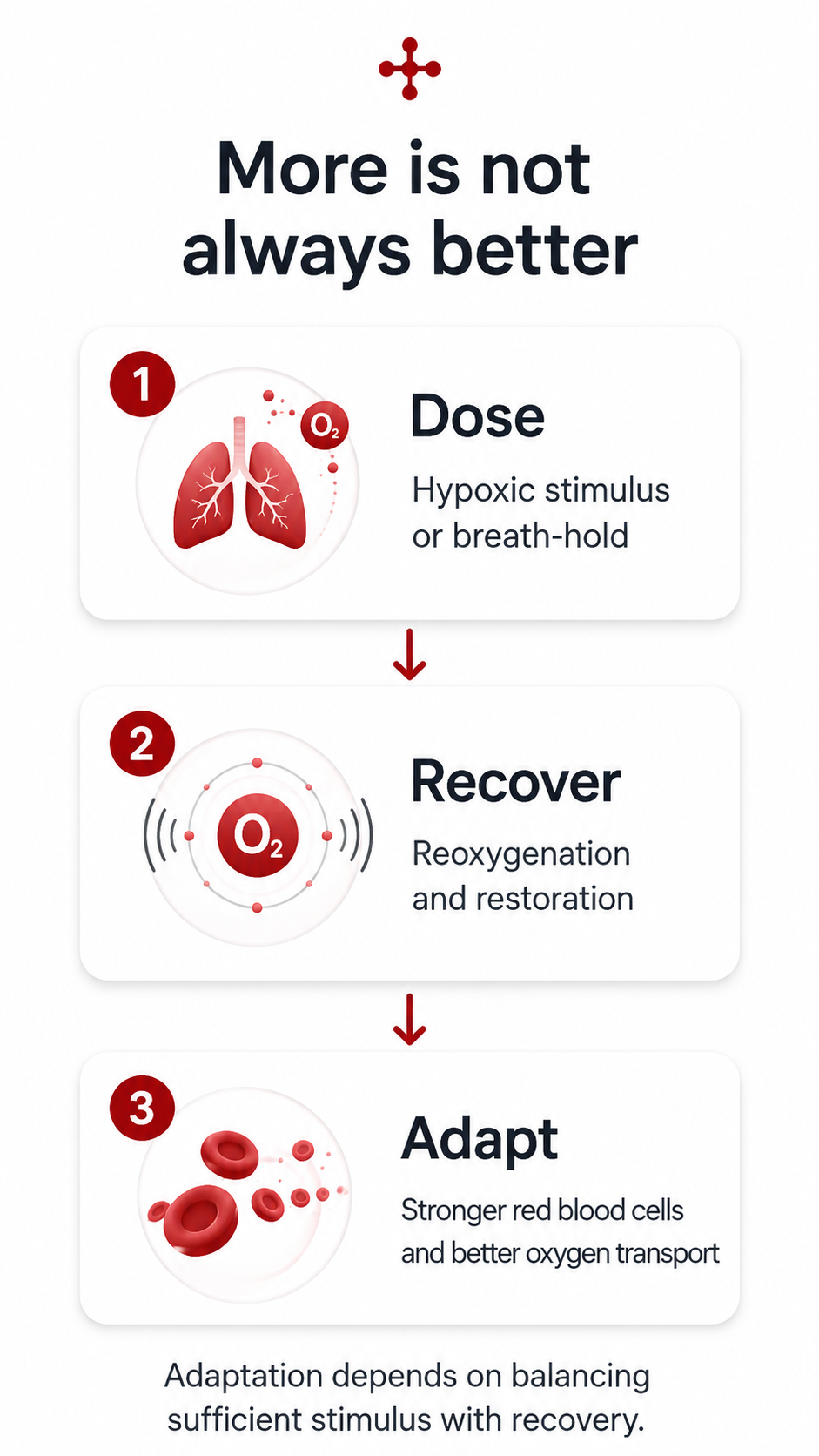
More is not always better
The goal is not to accumulate the maximum possible hypoxia. Adaptation depends on balancing sufficient stimulus with recovery.
Links